
We are Official Certified bubble.io & flutterflow App Development partner


Implementation Guide
Covers: API Keys • Row-Level Security • Database Triggers • Edge Functions • Storage
FlutterFlow makes it fast to build apps on Supabase — but the default settings leave your database wide open. This guide walks you through every security layer you need to lock it down properly, from the first API key decision to storage policies and role management.
By the end you will know how to:
Supabase gives FlutterFlow developers a real PostgreSQL database with a generous free tier and a clean visual integration. That combination makes it easy to ship fast — and easy to ship insecurely.
The core problem is that FlutterFlow runs in the browser or on a user’s device. Any API key, query, or logic you place in a FlutterFlow action is visible to anyone who inspects network traffic. Supabase’s default configuration does not protect you from this — that responsibility sits with you.
Without the patterns in this guide, a typical FlutterFlow + Supabase app has several critical gaps:
The good news: Supabase was built with these problems in mind. Row-Level Security, Edge Functions, storage policies, and database triggers all exist precisely to close these gaps — without requiring a separate backend. Every pattern in this guide runs inside Supabase itself, which means no extra infrastructure, no new services to maintain, and no changes to your FlutterFlow UI.
Work through each section in order. By Section 7 you will have a repeatable security pattern you can apply to every FlutterFlow + Supabase project you build.
Supabase provides two types of API keys for your project. The legacy JWT-based anon and service_role keys are being phased out — new projects now use the publishable key (sb_publishable_...) and secret key (sb_secret_...) instead, with legacy keys being permanently removed in late 2026. Understanding which key to use — and where — is the first and most important security decision you will make.
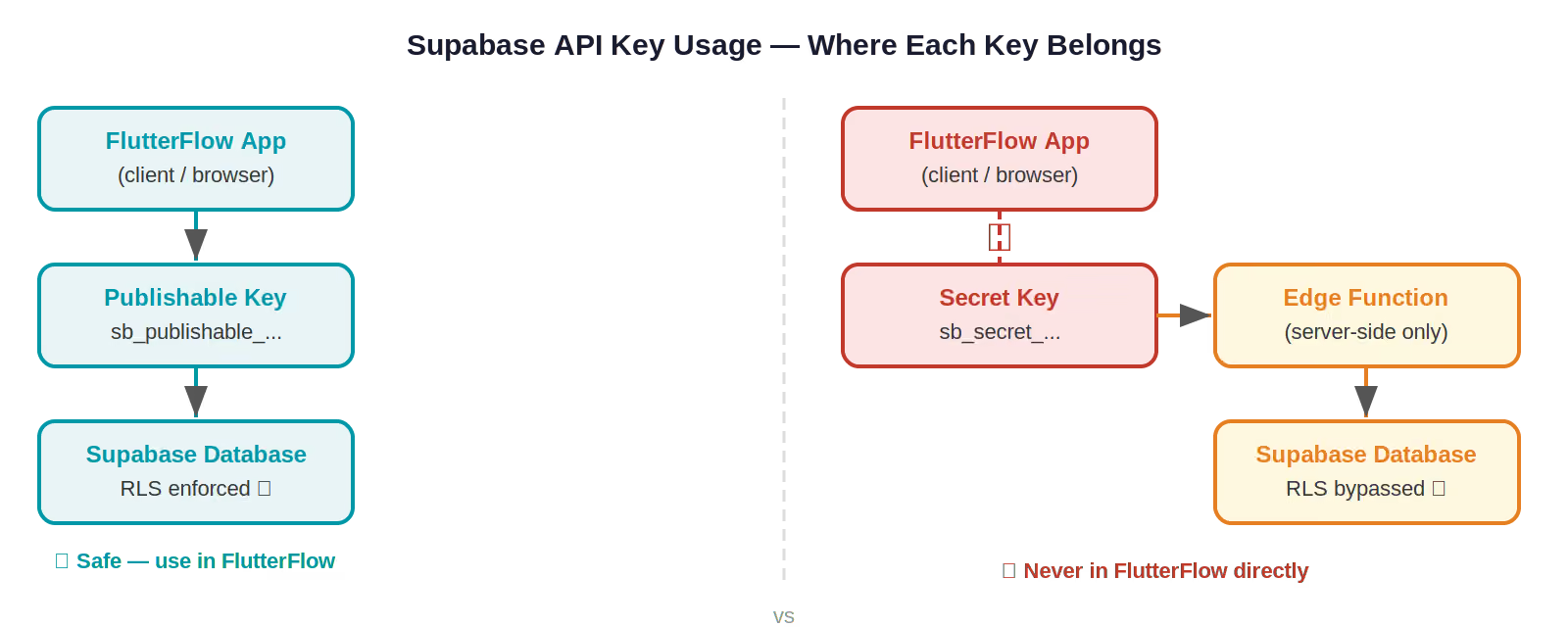
⚠️ Warning
If you place the secret key in FlutterFlow's API calls or custom actions, any user who inspects the app traffic can extract it and gain complete admin access to your database — bypassing every security rule you have written.
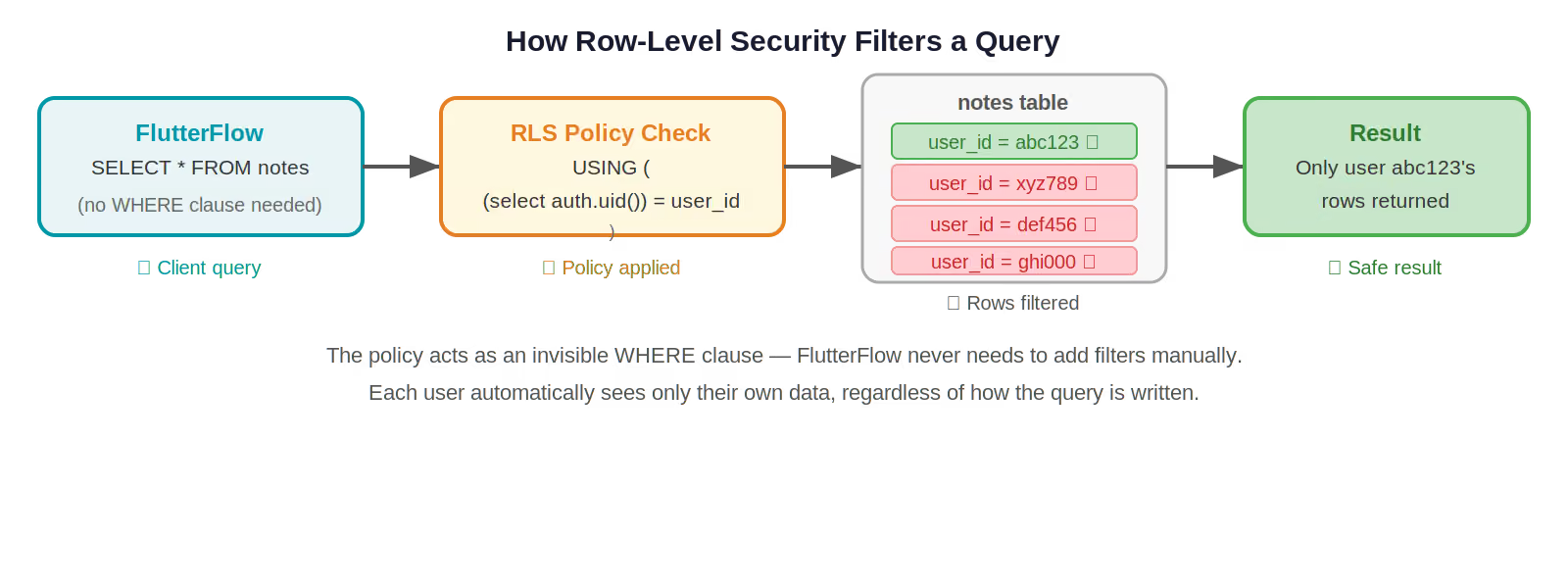
Row-Level Security (RLS) is Supabase's equivalent of Firestore Rules. It lets you attach fine-grained access policies directly to database tables, so that users can only read or write the rows they are permitted to — even when they share the same table.
When a query reaches Supabase, the database automatically applies any active policies for that table before returning results. Policies are written in SQL and can reference the currently authenticated user via the built-in function:
auth.uid() -- returns the UUID of the currently signed-in user
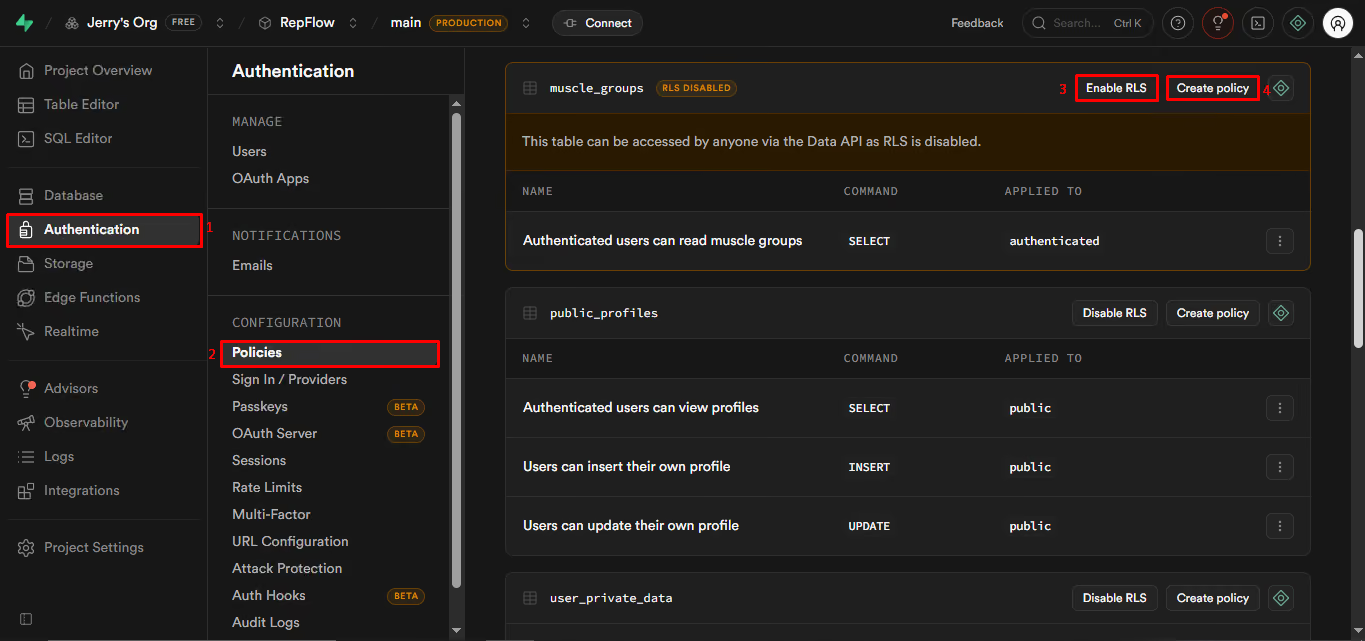
Every table starts with RLS disabled. You must explicitly enable it and then define policies for each operation (SELECT, INSERT, UPDATE, DELETE). In all policy code, always wrap auth.uid() in a subquery — (select auth.uid()) = user_id — rather than the bare form. Supabase’s official documentation confirms this caches the result per statement and can improve query performance by up to 95%. The examples in this guide use the optimised form throughout.
⚠️ Warning
Enabling RLS on a table with no policies returns zero rows for all users — even the table owner. Always add at least one policy after enabling RLS.
⚠️ Warning Unauthenticated requests and null auth.uid()
When no user is signed in (or a session has expired), auth.uid() returns null. A policy written as USING (auth.uid() = user_id) will silently return zero rows rather than an error — null = user_id is always false in SQL. Supabase’s official docs recommend making the intent explicit: USING (auth.uid() IS NOT NULL AND (select auth.uid()) = user_id). This prevents unexpected empty results from expired sessions and makes the policy easier to reason about.
-- Applied to SELECT operations on the 'orders' table
CREATE POLICY "Users see own orders"
ON orders
FOR SELECT
USING ( (select auth.uid()) = user_id );
-- The USING clause filters rows automatically.
-- If user_id does not match the logged-in user, the row is invisible.
-- Applied to SELECT on the 'products' table
CREATE POLICY "Authenticated users can view products"
ON products
FOR SELECT
TO authenticated -- only applies to logged-in users
USING ( true ); -- no additional row filter needed
CREATE POLICY "Users edit own profile"
ON profiles
FOR UPDATE
USING ( (select auth.uid()) = id ) -- must be their row
WITH CHECK ( (select auth.uid()) = id ); -- and the new data must still belong to them
💡 Example
Real-world scenario: You have a 'notes' table where every row has a user_id column.
Without RLS: Any authenticated user can query SELECT * FROM notes and get every note from every user.
With the pattern above: A SELECT query automatically adds WHERE (select auth.uid()) = user_id, so users only ever see their own notes — no change required in FlutterFlow.
FlutterFlow generates SELECT * queries by default. This means it fetches every column from a table. With RLS enabled, row-level filtering still works — users only get their own rows — but all columns in those rows are returned.
A database trigger is a piece of logic that runs automatically when a specific event happens on a table, such as a row being inserted, updated, or deleted. Triggers are ideal for enforcing business rules that cannot be expressed through RLS policies alone.
In Supabase, a trigger calls a PostgreSQL function (written in PL/pgSQL) when its event fires. You define:
Event (INSERT/UPDATE/DELETE)
|
v
Trigger fires
|
v
Database function runs
(can read NEW and OLD row data,
modify values, raise errors, etc.)
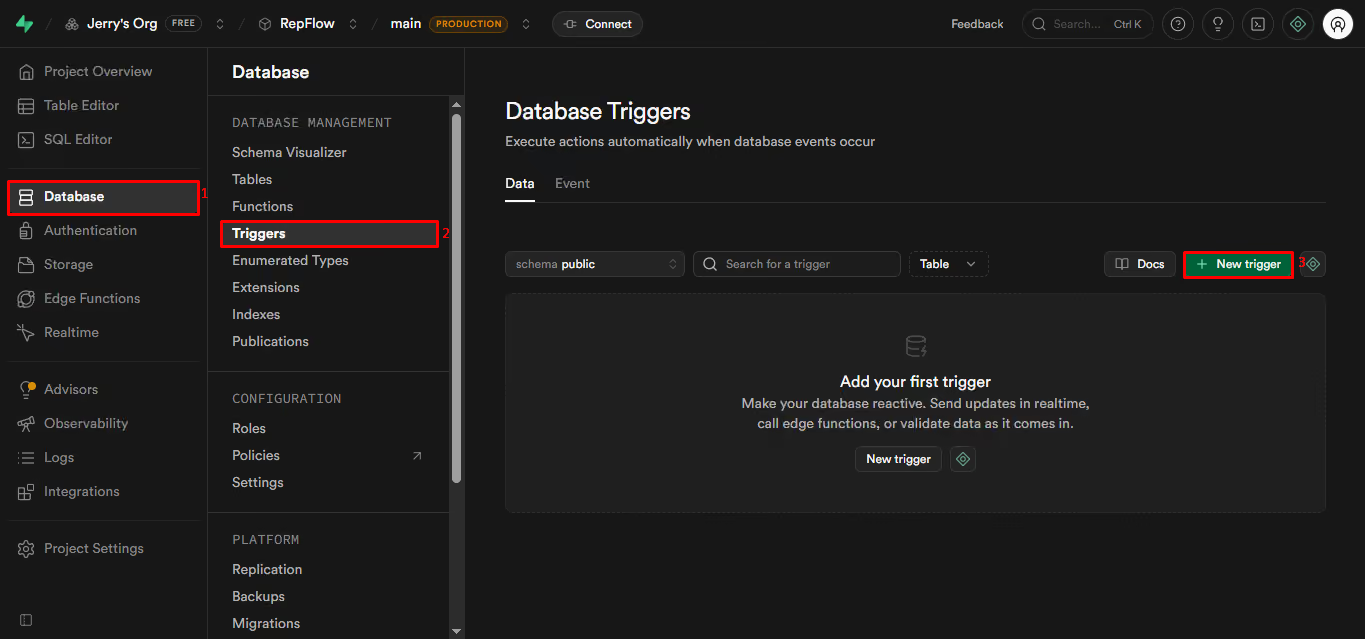
Triggers are created through the Supabase dashboard (Database > Triggers) or via SQL. The two-step process is: first create the function, then attach a trigger to it.
-- This function prevents users from assigning 'admin' role to themselves
CREATE OR REPLACE FUNCTION prevent_self_admin()
RETURNS TRIGGER AS $$
BEGIN
-- NEW refers to the row about to be inserted or updated
IF NEW.role = 'admin' THEN
-- Raise an error. Supabase returns this message to the client.
RAISE EXCEPTION 'You cannot assign the admin role to yourself.';
END IF;
RETURN NEW; -- allow the operation to proceed
END;
$$ LANGUAGE plpgsql;
CREATE TRIGGER check_role_on_insert
BEFORE INSERT OR UPDATE ON user_profiles
FOR EACH ROW
EXECUTE FUNCTION prevent_self_admin();
💡 Example
Scenario: A user tries to update their own profile and sets role = 'admin'.
Result: The trigger fires BEFORE the row is saved, the function raises an exception,
and the update is cancelled. The error message is returned to FlutterFlow,
where you can display it to the user.
There are two common approaches to storing user roles:
📝 Note
For most FlutterFlow apps, storing roles in a user_profiles table is simpler to work with. Pair it with a BEFORE INSERT/UPDATE trigger to prevent role self-assignment, and an RLS policy that prevents users from updating their own role column.
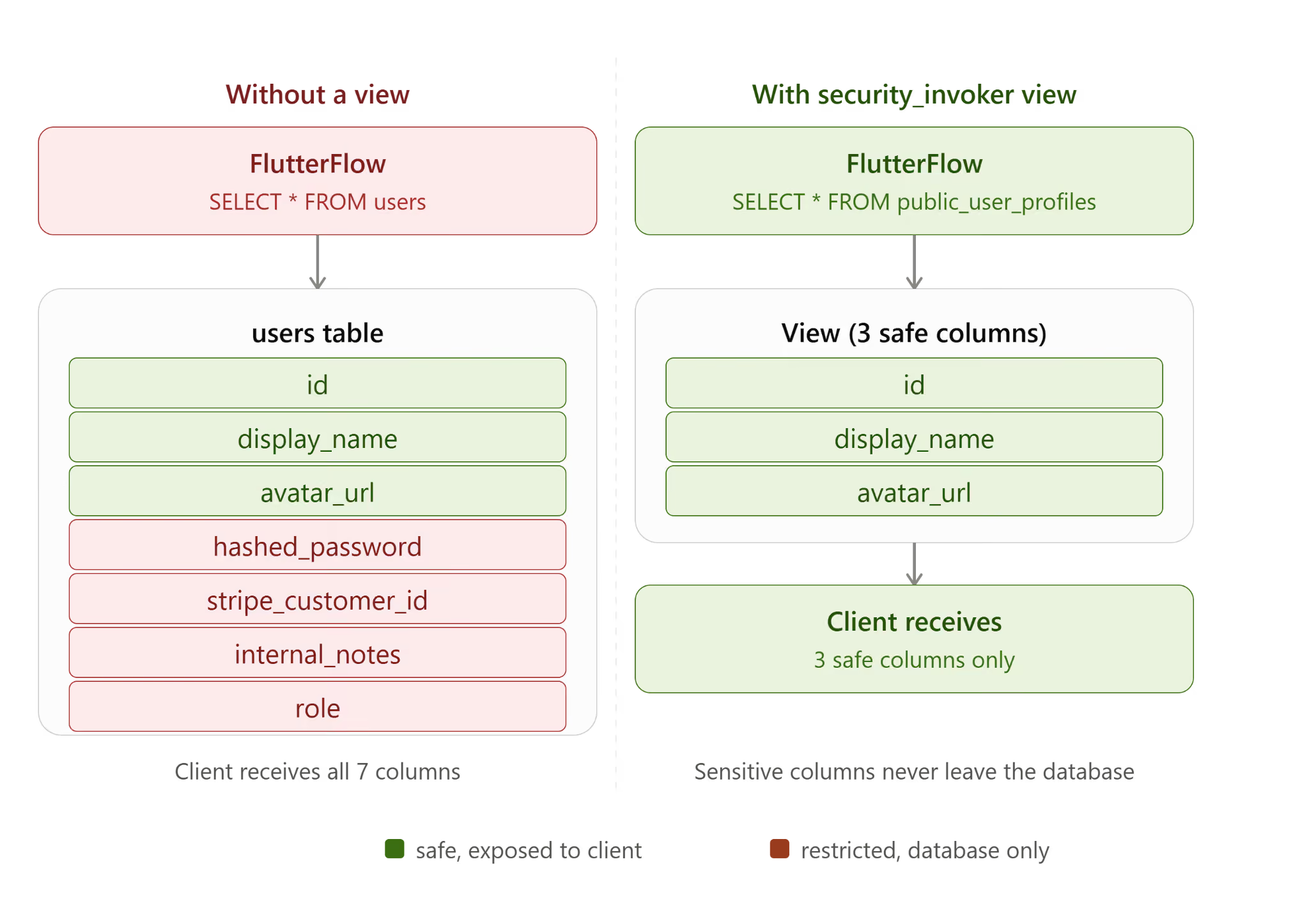
FlutterFlow's Supabase integration generates SELECT * queries by default. This fetches every column from a table, including any sensitive fields such as internal IDs, hashed data, or admin flags that the frontend should never see. RLS protects which rows are returned, but it does not filter columns.
⚠️ Warning
Example: Your users table has columns: id, email, display_name, hashed_password, role, stripe_customer_id, internal_notes.
FlutterFlow generates: SELECT * FROM users WHERE id = auth.uid()
This returns ALL columns to the client — including stripe_customer_id and internal_notes, which should never leave the backend.
A Supabase View is a saved SQL query that looks and behaves like a table. You can create a view that exposes only the columns that the frontend legitimately needs, then point FlutterFlow at the view instead of the underlying table.
-- Create a view that only exposes the safe columns
CREATE VIEW public_user_profiles
WITH (security_invoker = true) -- required: enforces RLS on the underlying table
AS
SELECT
id,
display_name,
avatar_url,
created_at
-- Intentionally omitting: hashed_password, role, stripe_customer_id, internal_notes
FROM users;
Now configure FlutterFlow to query public_user_profiles instead of users. FlutterFlow’s SELECT * on this view will only return the four safe columns. The WITH (security_invoker = true) clause is critical — without it, the view runs as the postgres superuser and bypasses all RLS policies, meaning every user could read every row.
📝 Note
Views are read-only by default. If users need to update their profile, create a separate, scoped UPDATE policy on the underlying table (not the view), or use an Edge Function.
Column-level privileges (GRANT SELECT (col1, col2) TO ...) are the PostgreSQL-native way to restrict column access. However, because FlutterFlow always requests all columns via SELECT *, revoking a column causes a permission error rather than silently omitting it. This makes column privileges unreliable in FlutterFlow. Stick with Views.
Edge Functions are Supabase's equivalent of Firebase Cloud Functions. They run server-side TypeScript/JavaScript code in a secure environment, outside the reach of the client. They are the correct place to perform any operation that requires admin privileges or that should not be exposed to users.
Edge Functions have two authentication layers. The first is a platform-level JWT check that runs before your code: by default, verify_jwt = true means the platform rejects any request without a valid user JWT before your handler even runs. You can disable this per function by setting verify_jwt = false in your project’s supabase/config.toml file. The second layer is whatever credential check you write inside your handler. The correct combination depends on who is calling the function:
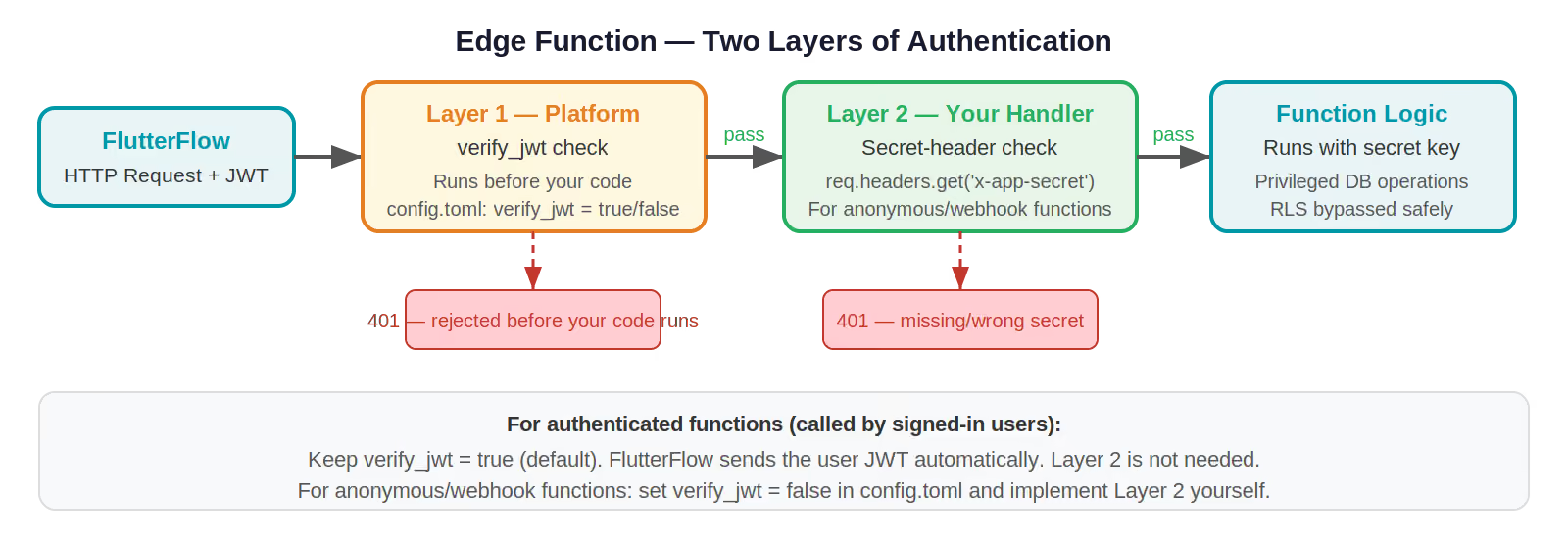
If a function must be callable without a user JWT (e.g. a webhook from Stripe or a public contact form), first set verify_jwt = false for that function in supabase/config.toml. This disables the platform JWT check so the function can be reached without a login token. You must then add your own security check inside the handler — the recommended approach is a shared secret:
# supabase/config.toml
[functions.my-public-function]
verify_jwt = false # disables platform JWT check for this function only
// Inside your Edge Function (TypeScript)
const APP_SECRET = Deno.env.get('APP_SECRET');
Deno.serve(async (req) => {
const clientSecret = req.headers.get('x-app-secret');
if (clientSecret !== APP_SECRET) {
return new Response('Unauthorized', { status: 401 });
}
// Safe to proceed — request came from our app
// ... your function logic here
});
FlutterFlow supports calling Edge Functions via Custom Actions or API Call blocks:
📝 Note
For unauthenticated Edge Functions called from FlutterFlow: store the App Secret as a FlutterFlow Environment Value. Reference it in your API call header. Do not store secrets in app state or local variables — they would be visible in memory.
Supabase Storage works similarly to Firebase Storage. Files are organized into buckets, and access is controlled through storage policies — which follow the same SQL-based syntax as RLS policies.
Just like database tables, storage buckets should have explicit policies. Without policies, a private bucket denies all access (good default), but you need policies to allow legitimate uploads and downloads.
-- Policy on the 'user_files' bucket
-- The file path is expected to be: /{user_id}/filename
CREATE POLICY "Users upload to own folder"
ON storage.objects
FOR INSERT
TO authenticated
WITH CHECK (
bucket_id = 'user_files'
AND (storage.foldername(name))[1] = auth.uid()::text
);
-- Same pattern for SELECT (download)
CREATE POLICY "Users read own files"
ON storage.objects
FOR SELECT
TO authenticated
USING (
bucket_id = 'user_files'
AND (storage.foldername(name))[1] = auth.uid()::text
);
💡 Example
Public profile picture workflow:
1. User picks an image in FlutterFlow.
2. FlutterFlow uploads to Supabase Storage 'avatars' bucket (public).
3. Supabase returns the public URL.
4. FlutterFlow updates the user_profiles table, storing the URL in avatar_url.
5. Any profile display in the app just reads avatar_url — no auth needed to show the image.
Use this checklist before launching any FlutterFlow + Supabase app.
.svg)
.svg)


.avif)
