

.jpg)
In 2026, speed, flexibility, and clarity are everything for startups. Replit isn’t just a coding platform, it's a founder’s launchpad for MVPs, AI tools, automation, and internal apps.
The question we hear most from founders:
“How do I actually use Replit to build and launch projects fast without getting stuck?”
This guide breaks it down with practical tips, step-by-step tutorials, and founder insights you can act on immediately.
Startups fail not because the ideas are bad they fail because execution is slow and messy. Replit solves this by:
Founder Insight: Teams using Replit iterate 40% faster and avoid early infrastructure headaches.
A common mistake is overbuilding. Focus on core features first.
How to start:
Mini Case: Startup X launched an AI content recommendation MVP in Python on Replit. They iterated 5 times in 3 weeks before releasing to beta users.
AI-first MVPs are common in 2026, but many founders wait too long to integrate AI.
Replit Tips:
Example: A startup integrated OpenAI API for automated email suggestions. Early testing in Replit helped them avoid costly rewrites.
Replit is perfect for founders building internal tools:
Mini Case: An internal HR tool built on Replit reduced manual reporting by 60%, freeing team time for strategic work.
Flutter/Dart support lets teams create cross-platform mobile apps fast.
Founder Insight: Mobile MVPs often reach users faster on Replit than traditional native builds.
Many modern startups use API-driven products:
Mini Example: Startup Y built a microservice-based SaaS MVP on Replit, ready to scale without code rewrites.
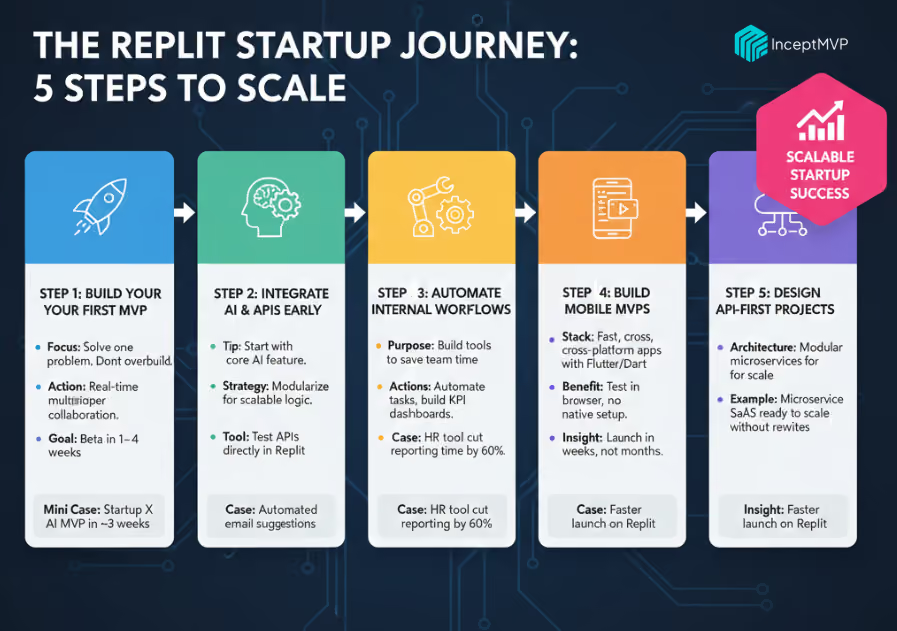
Insight: Even small teams accelerate development and avoid friction by following these practices.
Final Takeaway
Replit isn’t just another coding platform—it’s a founder-first launchpad built for how startups operate in 2026. It removes traditional development friction and replaces it with speed, flexibility, and collaboration, allowing founders to move from idea to launch without unnecessary overhead.
By following proven tutorials, applying best practices, and fully leveraging Replit’s real-time collaboration, AI capabilities, and automation tools, founders can:
For startups focused on speed, efficiency, and long-term control, Replit provides a practical foundation to launch, validate, and grow with confidence.
Key Insight: No-code platforms are fine for prototypes, but Replit ensures scalable, production-ready MVPs for serious startups.
Replit helps founders build and launch products faster by removing setup friction, enabling real-time collaboration, supporting multiple programming languages, and allowing direct deployment from the browser without complex infrastructure management.
Founders can start by identifying one clear problem their product solves, choosing the right development stack like Python or Node.js, building only essential features, testing quickly, and deploying an early beta version for real user feedback.
Yes, Replit supports seamless integration with AI APIs like OpenAI and other machine learning tools, making it easy for founders to build, test, and refine AI-powered MVP features directly in the browser.
Replit offers multiplayer coding, allowing developers, product managers, and collaborators to work inside the same project environment simultaneously. This reduces delays, improves communication, and speeds up iteration cycles.
Yes, Replit is ideal for building internal dashboards, automation scripts, reporting systems, and workflow tools because it supports backend logic, APIs, and fast deployment without traditional server setup.
Replit supports frameworks like Flutter and Dart, allowing founders to build cross-platform mobile MVPs quickly, test directly in the browser, and launch faster than traditional native development workflows.
Modular architecture makes products easier to update, scale, and maintain. It allows founders to add features, integrate APIs, and expand functionality without rebuilding large parts of the application later.
Founders should focus on building core features first, use real-time collaboration tools, integrate APIs early, keep code organized and modular, monitor product metrics from day one, and iterate based on actual user feedback instead of assumptions.
.webp)


.svg)
.svg)
.webp)


.avif)
