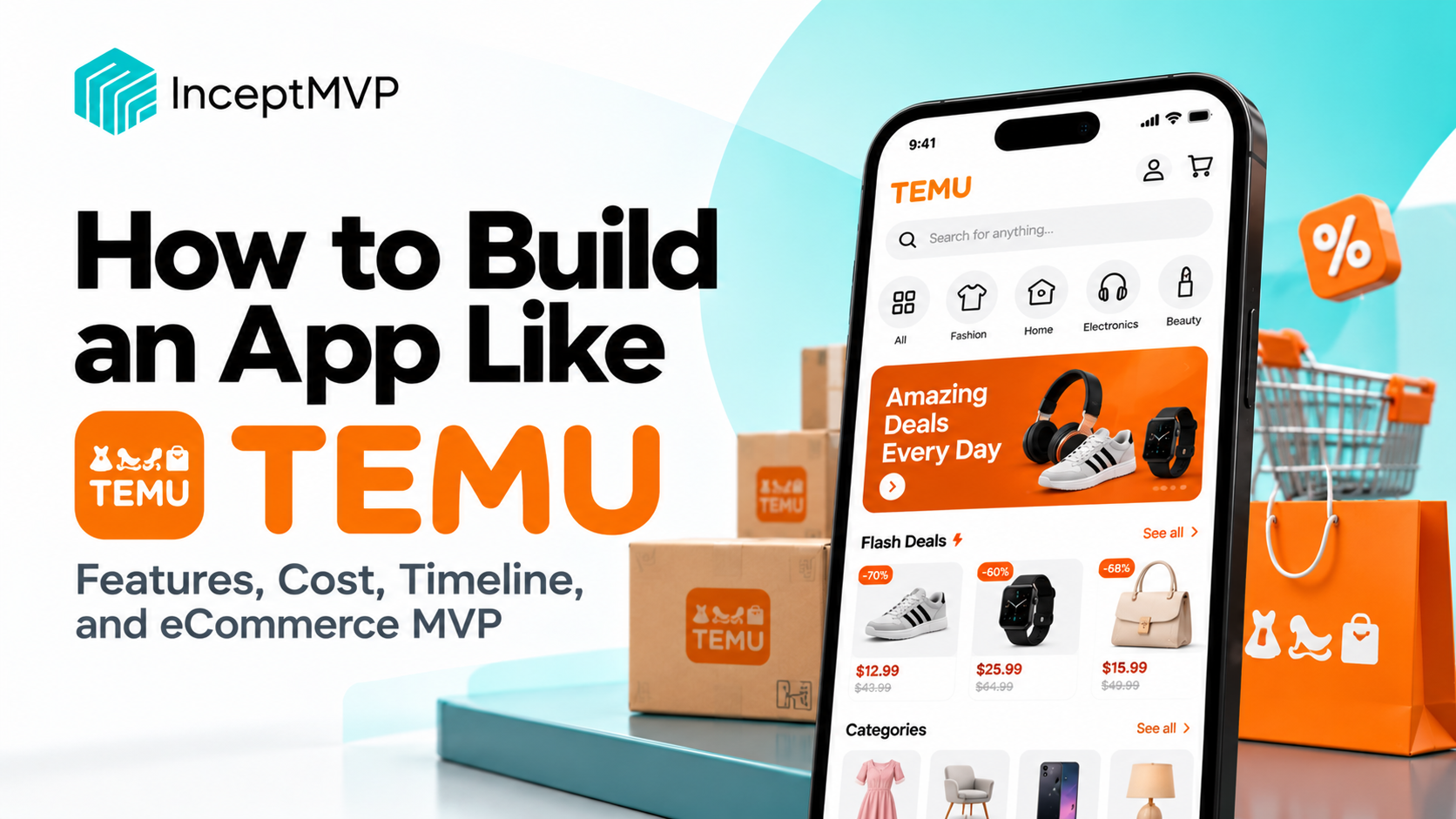
A practical guide to building a discount shopping app with product discovery, promotions, personalized recommendations, and cross-border eCommerce.
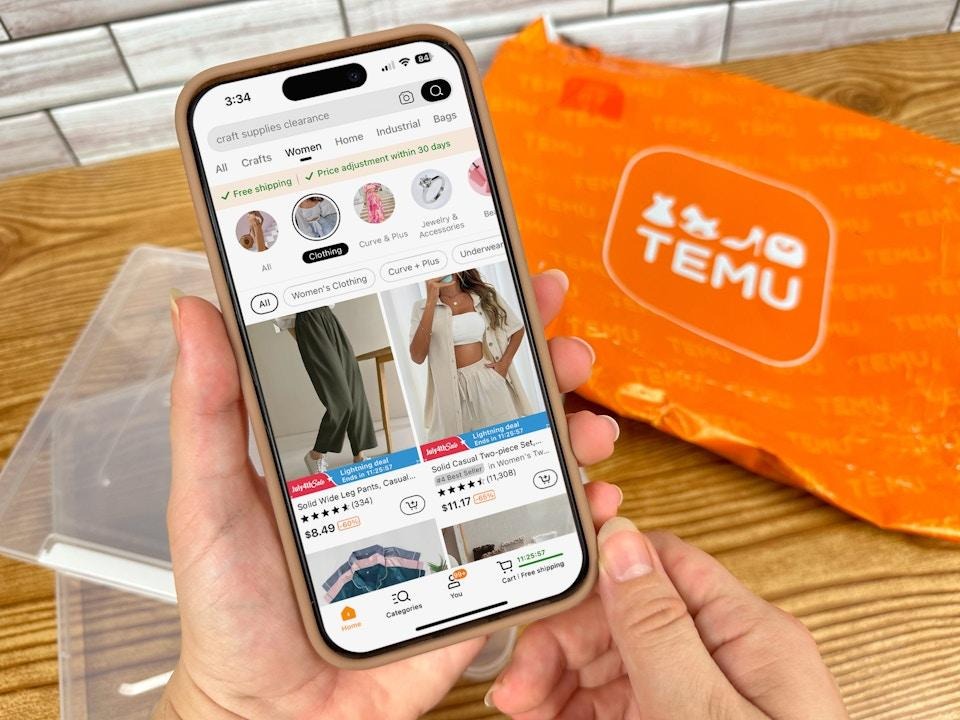
Online shoppers often look for three things: affordable products, a wide selection, and a simple way to discover good deals.
That combination has helped discount shopping platforms such as Temu attract attention. Its shopping experience brings together product discovery, promotional offers, mobile shopping, and a broad range of products.
If you want to build an app like Temu, the opportunity is not simply to copy its interface. It is to create a shopping experience that helps customers discover relevant products, understand the real price, and complete purchases with confidence.
You can start with a focused eCommerce MVP, test it with a specific audience, and expand the product catalog, promotions, and logistics as the business grows.
This guide explains how a Temu-style app works, which features to build first, how to plan promotions and cross-border sales, and what affects development cost and timeline.
A Temu-style shopping app is a discount-focused eCommerce experience built around product discovery, competitive offers, and convenient purchasing.
Depending on the business model, the platform may sell products directly, connect customers with third-party sellers, or combine both approaches.
Its core experience may include:
The important distinction is that a discount shopping app is not only a product catalog. Pricing, promotions, product quality, delivery, and customer experience all affect whether shoppers trust the platform and return.
A focused discount marketplace can serve customers looking for affordable products in a particular category or region.
Potential niches include:
These are possible niches to investigate, not verified opportunities. Before development, research competitors, buyer behavior, supplier availability, delivery costs, and the actual margins available in your target market.
A discount shopping app typically connects product discovery, promotions, checkout, and fulfillment in one customer journey.
1. Customer discovers products
Browses categories, searches for products, or explores recommendations.
2. Customer explores offers
Checks discounts, coupons, bundles, and product prices.
3. Customer places an order
Adds products to the cart, selects delivery, and completes checkout.
4. Order is fulfilled
The seller or warehouse prepares the order for dispatch.
5. Customer receives the order
Tracks delivery, receives support, and can review the purchase.
Behind this simple customer journey, the business must manage product data, inventory, prices, promotional rules, payments, delivery, and customer service.
The exact architecture depends on whether you are operating as a single retailer, a multi-vendor marketplace, or a hybrid model.
A useful first version should make it easy to find products, understand offers, place orders, and track delivery.
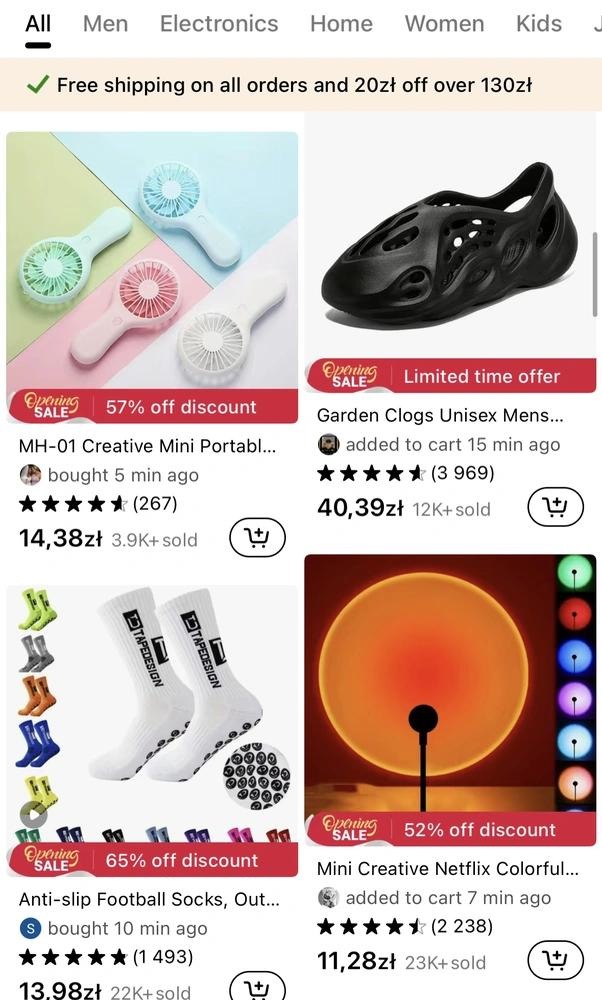
The customer app or website is the main shopping experience.
Essential MVP features:
For a first launch, prioritize clear product information and a reliable checkout over a large number of decorative features.
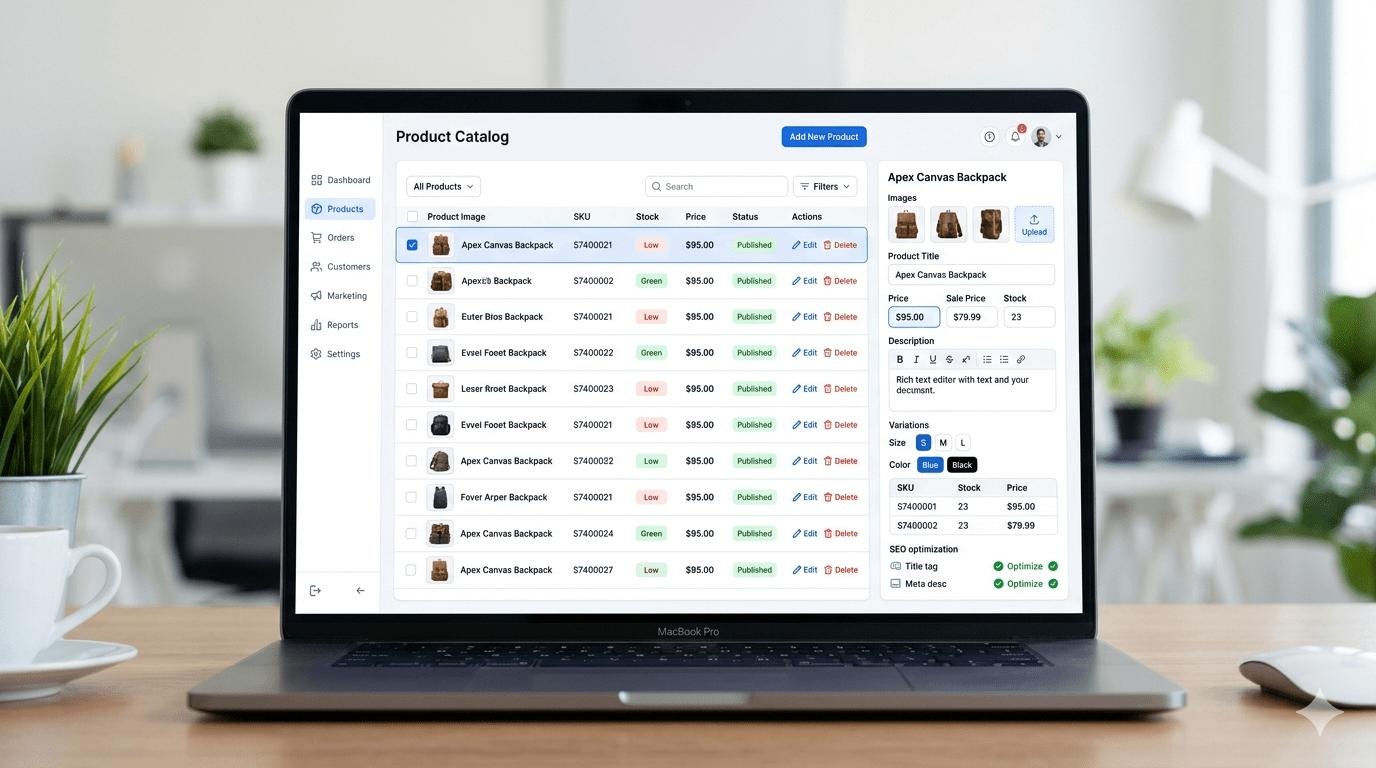
If your business allows third-party sellers, they need tools to manage products and orders.
Essential seller features:
For a single-retailer model, many of these tools can remain inside the business’s admin system instead of being exposed through a separate seller portal.
The admin panel controls the quality and operation of the marketplace.
|
Admin feature
|
Purpose
|
| --- | --- |
|
Product management
|
Add, edit, approve, and remove listings
|
|
Seller management
|
Review seller accounts and information
|
|
Inventory management
|
Monitor stock and availability
|
|
Pricing management
|
Maintain product prices and promotional prices
|
|
Order management
|
Monitor payment, fulfillment, and delivery status
|
|
Customer support
|
Handle complaints, returns, and refunds
|
|
Promotion management
|
Create and schedule campaigns
|
|
Reporting
|
Review sales, orders, and product performance
|
An admin panel is especially important when discounts are involved. Incorrect pricing or overlapping offers can create losses and customer disputes.
Delivery is a major part of the shopping experience, especially when products cross borders.
For an MVP, consider:
Start with the logistics model you can actually operate. You can add advanced carrier integrations once your order volume and target markets justify them.
A discount shopping app can have thousands of products, but a large catalog is not useful if shoppers cannot find relevant items.
Product discovery should make browsing simple while helping customers compare products.
A practical search experience may include:
For the MVP, focus on accurate search results and useful filters. Advanced search personalization can come later.
Recommendations can help shoppers discover products based on their interests and activity.
A first version might use straightforward rules, such as:
More advanced recommendation systems may use browsing behavior, purchase history, and machine-learning models. These require suitable data, careful testing, and privacy considerations.
MVP recommendation: Start with category-based and rule-based recommendations. Improve them after collecting enough reliable customer activity to evaluate whether personalization helps.
A product page should answer the questions customers have before buying.
Include:
Avoid relying on discount labels alone. Customers need to understand the actual price and what they will receive.
Promotions can encourage shoppers to explore products or complete purchases. But poorly designed discounts can reduce margins without creating sustainable customer demand.
A discount system needs clear rules and reliable price calculations.
|
Promotion
|
How it works
|
| --- | --- |
|
Percentage discount
|
Reduces the price by a stated percentage
|
|
Fixed-amount coupon
|
Reduces the order by a set amount
|
|
Bundle offer
|
Provides a price for purchasing selected products together
|
|
Minimum-spend offer
|
Applies a discount when the cart reaches a threshold
|
|
First-order offer
|
Provides an eligible discount to new customers
|
|
Limited-time promotion
|
Applies during a defined campaign period
|
|
Free-shipping offer
|
Removes or reduces delivery charges under stated conditions
|
These offers should be tested against product costs, shipping costs, payment fees, taxes, and expected returns.
Each promotion should have:
For example, a coupon may apply only to selected products and require a minimum cart value. The app should show why a coupon is accepted or rejected.
Your backend should calculate the final price and validate promotion rules. Do not rely only on prices calculated on the customer’s device.
Test situations such as:
A discount system should protect both customer clarity and business margins.
Selling internationally introduces more than an additional delivery address. You may need to handle different currencies, payment methods, shipping routes, taxes, customs requirements, and consumer protection rules.
The exact requirements depend on the countries involved, the products sold, and whether you are the retailer, marketplace operator, importer, or exporter.
An international shopping app may need to display prices in different currencies.
Consider:
Clearly distinguish estimated currency conversions from the final amount charged.
Payment methods differ by country. Your provider must support the countries, currencies, business structure, and transaction flows you intend to use.
Consider:
Do not assume a provider that supports ordinary online payments also supports marketplace payouts or every country you want to serve.
Cross-border delivery may involve multiple carriers, customs processes, and different delivery times.
Your app may need to show:
If import duties or taxes are not included in the checkout price, explain that clearly before the customer places an order.
Localization goes beyond translating the interface.
Depending on your target countries, consider:
MVP recommendation: Launch in one country or a small number of well-understood markets before expanding internationally. This helps you validate delivery, payments, product demand, and customer support with fewer operational variables.
An MVP is the smallest usable version of your shopping app that can test the business model with real customers.
You do not need a massive catalog, complex personalization, and international logistics on day one. You need a clear audience, relevant products, reliable checkout, and a workable fulfillment process.
Decide which model you are building.
|
Model
|
How it works
|
| --- | --- |
|
Single retailer
|
Your business sells its own products
|
|
Multi-vendor marketplace
|
Independent sellers list and sell products
|
|
Hybrid marketplace
|
Your business sells products and hosts third-party sellers
|
This decision affects inventory ownership, seller tools, payment flows, refunds, and customer support.
Choose a category where you can understand customer needs and source products reliably.
Research:
Avoid expanding the catalog simply to make the app look large.
Customer: Discover → Search → View product → Add to cart → Checkout → Track order.
Seller, if applicable: Register → Submit details → Add products → Manage stock → Receive orders → Dispatch.
Admin: Manage products → Review sellers → Manage promotions → Monitor orders → Handle support.
|
Build in the MVP
|
Consider after validation
|
| --- | --- |
|
Customer accounts
|
Advanced loyalty programs
|
|
Product catalog
|
Large-scale catalog automation
|
|
Search and basic filters
|
AI-powered recommendations
|
|
Cart and checkout
|
Complex checkout personalization
|
|
Basic coupons
|
Advanced promotional rules
|
|
Order management
|
Predictive inventory tools
|
|
Basic delivery tracking
|
Multi-carrier optimization
|
|
Admin panel
|
Advanced analytics and automation
|
|
Basic support and returns
|
Automated support agents
|
The first version should support real orders from discovery to fulfillment. Avoid adding features that do not help you validate the business.
Invite a small group of customers to use the app or website.
Test whether they can:
Track abandoned carts, failed payments, delivery issues, product returns, repeat purchases, and customer feedback.
Use the pilot to identify what is limiting purchases.
If customers browse but do not buy, investigate product relevance, prices, trust, delivery charges, and checkout friction before building more features.
The development cost depends on the business model, platform, number of features, integrations, and operational complexity.
A single-retailer shopping MVP is different from a multi-vendor marketplace with seller payouts, advanced promotions, international shipping, and large-scale product recommendations.
The following are illustrative planning ranges in USD, not verified industry averages or an InceptMVP quote.
|
Development scope
|
Illustrative planning range
|
| --- | --- |
|
Clickable prototype
|
$2,000–$8,000
|
|
Focused eCommerce MVP
|
$10,000–$30,000
|
|
Multi-vendor marketplace MVP
|
$15,000–$45,000
|
|
Advanced cross-border marketplace
|
$45,000–$100,000+
|
|
Large-scale global platform
|
Custom scope and pricing
|
These ranges assume professional product design and development. They exclude inventory purchasing, international shipping operations, customer acquisition, payment processing fees, legal advice, and ongoing maintenance. Actual proposals may fall outside these ranges.
|
Cost factor
|
Why it matters
|
| --- | --- |
|
Business model
|
Single-retailer and multi-vendor workflows differ
|
|
Catalog size and structure
|
Complex product attributes require more data management
|
|
Search and recommendations
|
Advanced discovery requires more logic and testing
|
|
Promotion engine
|
Stacking rules, eligibility, and price validation add complexity
|
|
Payment integrations
|
International payments and seller payouts may need additional work
|
|
Cross-border shipping
|
Carrier integrations and delivery rules increase scope
|
|
Localization
|
Multiple currencies, languages, and address formats add work
|
|
Admin tools
|
Product moderation, support, and reporting require operational controls
|
|
Mobile platforms
|
Separate native apps can increase design and testing requirements
|
Ask developers to itemize discovery, design, development, testing, deployment, integrations, and ongoing support.
The right approach depends on your product requirements, budget, and expected scale.
No-code development
Can be suitable for validating a web-based shopping MVP with standard accounts, product listings, checkout workflows, and admin tools.
Consider it when you want to test the business model before investing in more complex systems.
Low-code development
Can support custom mobile experiences connected to backend services for products, orders, and user accounts.
Consider it when mobile shopping and a tailored app experience are important to the product.
Custom development
May be appropriate for specialized pricing, complex marketplace payments, extensive integrations, or specific infrastructure requirements.
Consider it when the required workflows cannot be implemented or maintained efficiently with your chosen visual development platform.
|
Layer
|
Possible options
|
| --- | --- |
|
Web application
|
Bubble or custom web development
|
|
Mobile application
|
FlutterFlow or custom mobile development
|
|
Backend
|
Platform-native backend or dedicated backend service
|
|
Database
|
Managed database or custom database architecture
|
|
Payments
|
Provider supporting the target country and business model
|
|
Shipping
|
Manual fulfillment tools or carrier integrations
|
|
Notifications
|
Email, push, or messaging services
|
|
Analytics
|
Product analytics and admin reporting
|
These are possible approaches, not a required stack. Select technologies based on the workflows you need, the team maintaining them, and the countries in which the product will operate.
A focused eCommerce MVP may take approximately 2–4 months from discovery to launch. A multi-vendor or cross-border marketplace can take longer depending on integrations and operational requirements.
|
Development stage
|
Illustrative duration
|
| --- | --- |
|
Discovery and requirements
|
1–2 weeks
|
|
UX/UI design
|
2–4 weeks
|
|
Core app development
|
4–10 weeks
|
|
Payment and shipping integration
|
2–6 weeks
|
|
Testing and refinement
|
2–4 weeks
|
|
Launch preparation
|
1–2 weeks
|
Some stages can overlap, so the total calendar time may differ from the sum of the ranges.
Payment-provider approvals, product data preparation, seller onboarding, logistics setup, and regulatory requirements can also affect launch timing.
For a discount shopping app, test the final payable amount carefully. Customers should not discover unexpected charges at the last step.
The right revenue model depends on whether you sell your own products, host independent sellers, or combine both.
A retailer purchases or sources products and sells them at a price that covers product costs, fulfillment, operations, and profit.
This model requires careful inventory and margin management.
A marketplace may charge sellers a percentage of completed transactions.
The platform needs clear seller terms, accurate order records, and a process for cancellations, refunds, and disputes.
Sellers may pay recurring fees for additional listings, storefront features, analytics, or other marketplace tools.
This works only when sellers receive ongoing value from the platform.
Sellers may pay for additional visibility in search results or category pages.
Paid placements should be clearly identified so customers can distinguish promotions from ordinary search results.
A platform may charge for services such as fulfillment, storage, inspection coordination, or other services it actually provides.
Fees should be transparent and connected to the service delivered.
Discounts may encourage purchases, but they are a cost or pricing decision. The business must understand whether the additional sales cover the discount and other expenses.
Track:
These measures help you understand whether the business is generating sustainable value rather than just attracting clicks.
Discounts can attract shoppers, but long-term customer relationships depend on product quality, accurate information, and reliable support.
A marketplace should plan for:
For cross-border commerce, return shipping and refund responsibilities can be more complicated. Define who handles each issue before opening sales in a new country.
Do not advertise guaranteed delivery, universal refunds, or product authenticity unless your business can actually support those promises.
A large catalog is not useful if products are poorly described, unavailable, or difficult to deliver. Start with a manageable selection and expand based on sales.
A discount may increase orders while reducing contribution per order. Calculate product, delivery, payment, return, and promotional costs before running a campaign.
The interface is only one part of the experience. Your own product needs a suitable supplier model, fulfillment process, pricing strategy, and customer support system.
Recommendations need useful data and a way to measure results. Start with simple discovery features and improve them after collecting real usage data.
Different markets may require different payments, shipping, taxes, customs processes, and consumer policies. Begin where you can reliably fulfill orders.
Delayed deliveries, damaged products, and refund questions can affect customer trust. Plan support workflows as part of the product, not as an afterthought.
App installs do not prove that the marketplace is working. Measure completed orders, repeat purchases, customer satisfaction, and contribution margin.
A discount shopping app combines product discovery, pricing, promotions, checkout, order management, and potentially multi-vendor operations.
InceptMVP provides app development services for businesses building digital products, including marketplace and eCommerce-style applications.
For a Temu-inspired product, development should begin with a clear business model, target market, product category, promotion rules, and fulfillment plan. These decisions help define the MVP and prevent unnecessary features from consuming the budget.
A successful shopping platform starts with a focused audience, relevant products, transparent offers, and a reliable way to fulfill orders.
Define your product scope, map the customer journey, and choose a development approach that fits your business model.
A focused eCommerce MVP may have an illustrative planning range of $10,000–$30,000. A multi-vendor or cross-border marketplace can cost more depending on seller tools, payments, shipping integrations, and promotional complexity. These are planning estimates, not fixed quotes.
A focused eCommerce MVP may take around 2–4 months from discovery to launch. More complex marketplace and international commerce requirements can extend the timeline.
Core features include customer accounts, product discovery, search and filters, product pages, discounts, cart, checkout, payments, order tracking, customer support, and an admin panel. Multi-vendor products also need seller tools.
A focused shopping MVP with standard product listings, accounts, checkout, and admin workflows may be feasible with no-code tools. More complex promotions, marketplace payments, and cross-border integrations need careful technical planning.
Possible revenue sources include product sales margins, seller commissions, subscriptions, featured listings, advertising, and optional service fees. Discounts themselves are not revenue; their effect on margins must be measured.
They use rules for eligible products, discount amounts, dates, customer eligibility, usage limits, and combinations with other offers. The backend should validate the final price.
A single-retailer app sells products managed by one business. A multi-vendor marketplace lets independent sellers list products and fulfill orders, requiring seller onboarding, management tools, and potentially seller payout workflows.
Yes, but international sales may require additional currencies, payment methods, shipping options, customs information, localization, and country-specific policies. Start with markets your business can reliably serve.
A responsive web app can be a practical way to test product demand and checkout workflows. A mobile app may be useful when your audience shops frequently on mobile or needs push notifications and mobile-specific features.
Start with a focused catalog, customer accounts, search, product pages, cart, checkout, order management, and customer support. Add advanced recommendations, loyalty systems, and complex promotions after validating the core shopping journey.