INCEPTMVP | Marketplace App Development Guide
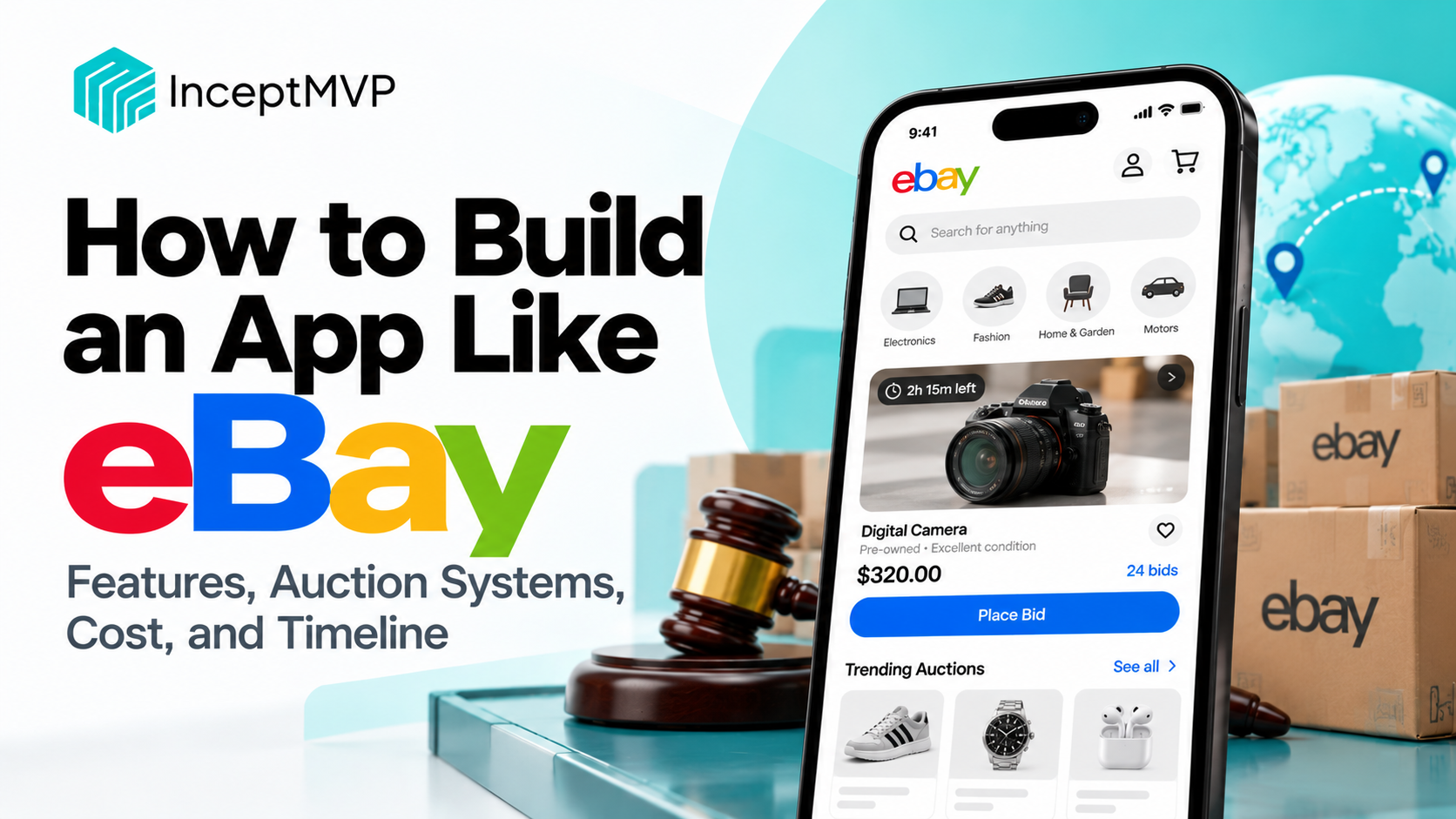
Building an app like eBay means creating more than an online store. You need a marketplace where sellers can list products, buyers can bid or purchase instantly, payments can be processed securely, and users have clear ways to handle disputes.
The opportunity is to build a marketplace around a specific category or community, rather than trying to recreate eBay’s entire global platform at launch.
This guide covers how an eBay-style app works, which features belong in the MVP, how auction and payment workflows fit together, and what affects development cost and timeline.
Who this guide is for: Founders, startups, and businesses planning a peer-to-peer or multi-vendor marketplace with auctions, fixed-price listings, or both.
An eBay-style marketplace connects buyers and sellers through product listings. Depending on the seller’s chosen format, a buyer may purchase an item immediately or compete with other buyers through an auction.
A marketplace can support several selling formats:
|
Selling format
|
How it works
|
| --- | --- |
|
Auction
|
Buyers submit bids before a deadline
|
|
Fixed price
|
Buyers purchase at the listed price
|
|
Best offer
|
Buyers propose a price for the seller to accept, reject, or negotiate
|
|
Classified listing
|
Buyers contact sellers to arrange a transaction
|
A new marketplace does not need every format. The right mix depends on the products being sold and how customers prefer to buy them.
Auctions can be useful when the final selling price is uncertain, products are unique, or buyers value the opportunity to compete for an item.
Potential niches include:
These are potential markets to investigate, not proof that demand exists in every location. Validate the product category, buyer interest, seller supply, and applicable regulations before building.
The basic marketplace journey has four key stages: listing, bidding or buying, payment, and fulfillment.
1. Seller creates a listing
Adds photos, description, condition, starting price, and auction end time.
2. Buyers place bids
Eligible buyers submit bids according to the marketplace’s rules.
3. Auction closes
The system determines the outcome using the published auction rules.
4. Buyer completes payment
The buyer pays, and the seller receives the order details.
5. Seller fulfills the order
The item is dispatched or handed over, and the order is marked complete.
The exact process depends on the marketplace’s policies. For example, some auctions may require payment within a set period, while others may need seller confirmation or additional checks.
The feature set should support the complete buyer and seller journey, with an admin panel to oversee marketplace activity.
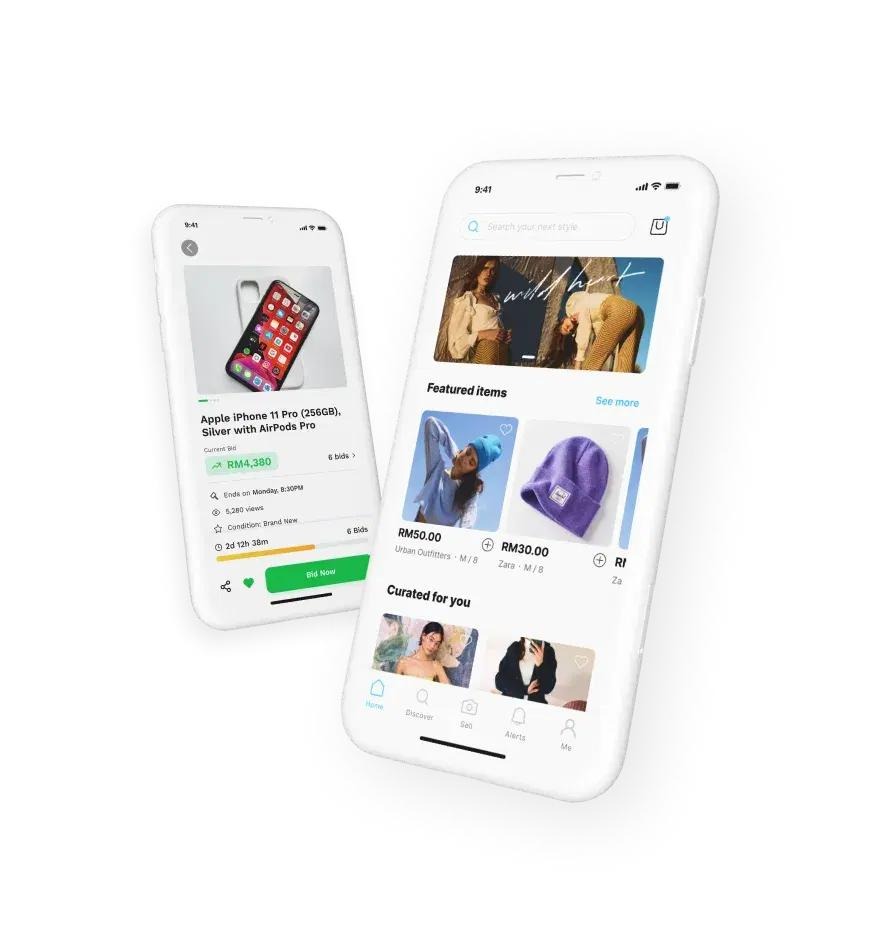
Buyers need to discover items, understand the auction rules, and complete purchases confidently.
MVP features:
Make the current bid, minimum next bid, auction end time, and any shipping costs easy to understand. These details can prevent confusion and reduce support requests.
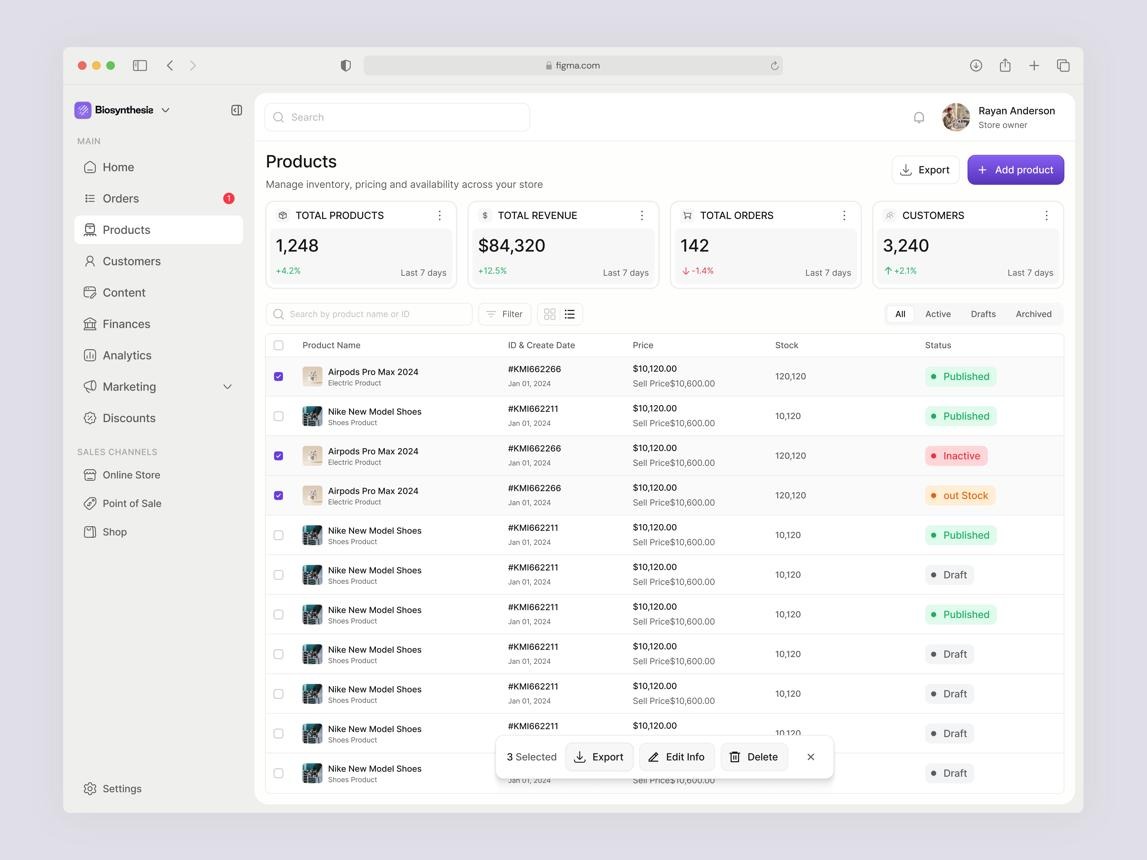
Sellers need to list products, manage their auctions, and fulfill orders.
MVP features:
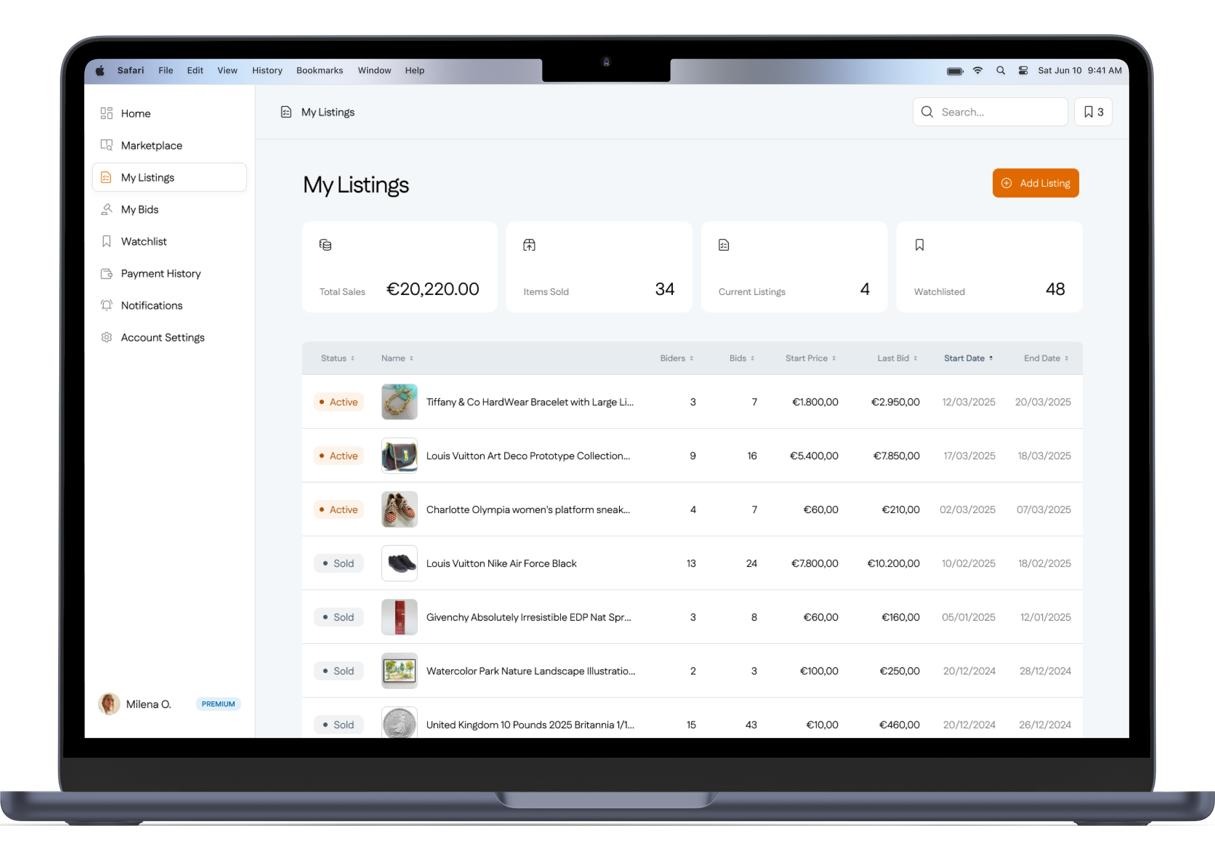
For the first version, sellers should have a simple dashboard that shows active listings, ended auctions, sold items, and pending orders.
An auction marketplace needs operational controls. The admin panel should let the team monitor listings, users, bids, payments, and disputes.
|
Admin feature
|
Purpose
|
| --- | --- |
|
User management
|
Review, suspend, or restrict accounts
|
|
Seller review
|
Check seller submissions and verification status
|
|
Listing moderation
|
Review prohibited, misleading, or reported listings
|
|
Auction monitoring
|
Inspect auction status and suspicious activity
|
|
Bid records
|
Review bid history and system events
|
|
Payment oversight
|
Track payment status and failed transactions
|
|
Dispute management
|
Record complaints, evidence, and outcomes
|
|
Reporting
|
Monitor listings, bids, sales, and user activity
|
Admin actions should be recorded in an audit log, especially when they affect bids, account status, payments, or auction outcomes.
Delivery requirements depend on the type of products and the marketplace’s business model.
For a basic MVP, consider:
If the marketplace sells bulky equipment or locally collected items, pickup scheduling and delivery coordination may matter more than standard parcel tracking.
The auction engine is one of the most important parts of an eBay-style app. It determines whether bids are valid, who is leading, when the auction ends, and what happens afterward.
Before development, define the rules in plain language.
|
Rule
|
What the app needs to decide
|
| --- | --- |
|
Starting price
|
The minimum opening bid
|
|
Bid increment
|
How much a new bid must exceed the current bid
|
|
Reserve price
|
Whether the seller has a minimum acceptable price
|
|
Auction duration
|
When bidding opens and closes
|
|
Bid eligibility
|
Who is allowed to place bids
|
|
Auction extension
|
Whether last-minute bids extend the deadline
|
|
Winning bid
|
How the winner is determined
|
|
Payment deadline
|
How long the winner has to pay
|
|
Non-payment
|
What happens if the winner does not pay
|
These rules must be visible to users before they participate.
Suppose a seller lists a used camera with a starting price of PKR 20,000 and a minimum bid increment of PKR 500.

Used mirrorless camera
Illustrative auction example
Current leading bid
Starting price
PKR 20,000
Minimum increment
PKR 500
Minimum next bid
PKR 22,500
All prices are fictional and used only to explain the bidding logic.
The system must validate every bid against the latest accepted bid. It should not rely only on the amount shown on a buyer’s screen, because another buyer may have placed a bid moments earlier.
Auction systems need to handle simultaneous requests safely.
A reliable design should:
The backend, not the user’s browser or mobile app, should decide whether a bid is valid.
Automatic or proxy bidding lets a buyer specify a maximum amount. The system then places eligible bids according to the auction’s rules.
It can be useful, but it adds complexity. You need to define how maximum bids interact, how bid increments work, and how ties or simultaneous submissions are handled.
MVP recommendation: Start with straightforward manual bidding unless automatic bidding is central to your product’s value. Add it after testing the simpler auction workflow.
Some marketplaces use an extension rule to reduce last-second bidding. Others close at the published time.
If you choose an extension, define:
Do not leave these rules to guesswork. Show them clearly on the listing and enforce them consistently.
Payments and trust are closely connected in a marketplace. Buyers want confidence that they will receive what they paid for, while sellers want confidence that valid purchases will be paid.
Depending on the target market and business model, an MVP may include:
Payment methods vary by country. Confirm that your selected provider supports your business registration, currencies, buyer locations, seller payouts, and marketplace payment model.
Buyer protection is not just a refund button. It requires clear policies and a process for handling problems.
Consider:
Avoid promising guaranteed refunds or complete transaction protection unless the business has the policies, payment arrangements, and operational capacity to provide them.
A balanced marketplace also needs to protect sellers from:
Useful tools include verified contact details, bid activity logs, reporting mechanisms, seller evidence submission, and consistent dispute handling.
The smartest starting point is a focused marketplace for one category and one core transaction journey.
A marketplace for collectible cards has different requirements from a marketplace for used industrial equipment. Narrowing the market helps you make better decisions about product fields, auction rules, shipping, and buyer protection.
Interview potential buyers and sellers before development.
Ask buyers:
Ask sellers:
Look for real behavior: existing sales, current buying methods, willingness to list products, and interest in joining a pilot.
Avoid launching with an unrestricted catalog unless you already have the resources to moderate it.
Choose a niche where you can recruit sellers, understand product quality, and reach buyers efficiently.
Write down the rules before designing the screens.
Include bid validation, auction closing, reserve prices, payment deadlines, non-payment, cancellations, disputes, refunds, and seller payouts.
|
Build in the MVP
|
Add after validation
|
| --- | --- |
|
Buyer and seller accounts
|
Complex business account structures
|
|
Product listings
|
Advanced listing promotion
|
|
Search and categories
|
Personalized recommendations
|
|
Manual bidding
|
Proxy bidding and advanced bidding rules
|
|
Auction countdown and close
|
Complex auction formats
|
|
Basic checkout
|
Multiple payment-provider routing
|
|
Order status
|
Advanced logistics integrations
|
|
Basic reviews and reports
|
Automated fraud scoring
|
|
Admin moderation
|
Advanced analytics and automation
|
The MVP should be complete enough to support real transactions, but limited enough to test and improve without unnecessary complexity.
Invite a small group of sellers and buyers into a pilot marketplace.
Measure:
The goal is to find out whether the marketplace can support successful transactions, not simply whether people will download an app.
The cost depends on the marketplace’s scope, auction rules, payment integrations, platform choice, security requirements, and administrative workflows.
A basic marketplace with manual bidding and straightforward checkout is very different from a large-scale auction platform with automated bidding, complex fraud controls, extensive logistics integrations, and advanced buyer protection.
The following are illustrative planning ranges in USD, not verified industry averages or an InceptMVP quote.
|
Development scope
|
Illustrative planning range
|
| --- | --- |
|
Clickable prototype
|
$2,000–$8,000
|
|
Focused auction marketplace MVP
|
$12,000–$35,000
|
|
More advanced marketplace
|
$35,000–$90,000+
|
|
Large-scale marketplace
|
Custom scope and pricing
|
These ranges assume professional product design and development. They exclude marketplace operations, customer acquisition, payment processing fees, legal advice, and ongoing maintenance. Actual proposals can be outside these ranges.
|
Cost factor
|
Why it changes the budget
|
| --- | --- |
|
Auction engine
|
Bid validation, concurrency, extensions, and automated bidding require careful implementation
|
|
User roles
|
Buyers, sellers, and admins need different workflows
|
|
Payments
|
Marketplace payment flows, refunds, and payouts add complexity
|
|
Buyer protection
|
Disputes, evidence, and refund workflows require both software and operations
|
|
Mobile apps
|
Separate mobile applications can increase design and testing work
|
|
Verification
|
Manual checks differ from third-party identity or business verification
|
|
Scale
|
High bid volume and real-time activity affect architecture and testing
|
|
Integrations
|
Shipping, notifications, analytics, and external services add scope
|
Ask developers to itemize discovery, design, development, testing, deployment, and ongoing support rather than providing one unexplained total.
The right development approach depends on the complexity of your auction rules and how much control the product needs.
No-code development
Can be suitable for validating a marketplace with standard user accounts, listings, admin workflows, and simple bidding.
Consider it when speed and testing the business model are priorities. Carefully test concurrent bids and time-sensitive auction logic.

Low-code development
Can be useful for custom mobile experiences connected to a backend that handles listings, bids, payments, and user permissions.
Consider it when mobile usage is central and the backend can reliably enforce auction rules.

Custom development
May be appropriate for complex auction rules, specialized payment flows, high transaction volume, or detailed infrastructure requirements.
Consider it when the required behavior cannot be implemented reliably or maintained efficiently with your chosen platform.
|
Product layer
|
Possible options
|
| --- | --- |
|
Web application
|
Bubble or custom web development
|
|
Mobile application
|
FlutterFlow or custom mobile development
|
|
Backend
|
Platform-native backend or a dedicated backend service
|
|
Database
|
Managed database or custom database architecture
|
|
Real-time updates
|
Realtime service or server-driven updates
|
|
Payments
|
Provider that supports the target marketplace and countries
|
|
Notifications
|
Email, push, or messaging integrations
|
|
Analytics
|
Product analytics and admin reporting
|
The auction engine should be designed around server-side validation, consistent bid records, and reliable handling of simultaneous requests. Choosing a visual app builder does not remove those requirements.
A focused auction marketplace MVP may take approximately 3–5 months from discovery to launch, depending on scope, team size, and integration requirements.
|
Stage
|
Illustrative duration
|
| --- | --- |
|
Discovery and requirements
|
1–2 weeks
|
|
UX/UI design
|
2–4 weeks
|
|
Core marketplace development
|
4–8 weeks
|
|
Auction and payment workflows
|
3–6 weeks
|
|
Testing and refinement
|
2–4 weeks
|
|
Launch preparation
|
1–2 weeks
|
Some stages can overlap. Complex auction rules, payment-provider approvals, identity checks, or shipping integrations may extend the schedule.
For auction software, testing edge cases is essential. A polished interface cannot compensate for incorrect bidding or payment logic.
A marketplace can combine several revenue models. The best fit depends on what sellers value and how transactions occur.
Charge sellers to create certain types of listings or to publish additional products.
This can create revenue before a sale, but fees may discourage new sellers if they have not yet seen marketplace demand.
Charge a percentage of completed sales.
This connects marketplace revenue to successful transactions, but requires reliable order tracking and clear policies for cancellations and refunds.
Allow sellers to pay for additional visibility.
Clearly label paid placements so buyers can distinguish promoted listings from ordinary search results.
Offer paid plans with benefits such as:
Subscriptions work when sellers receive ongoing value from the platform.
A marketplace may charge for services such as inspection coordination, shipping support, or other services it actually provides.
Any fee should be disclosed before the buyer or seller commits to a transaction.
Different auction types need different rules and testing. Start with one format that matches the target market.
Two buyers may submit bids at nearly the same time. The backend must validate and record bids consistently.
Users should understand minimum bids, increments, deadlines, extensions, reserve prices, and what happens after an auction ends.
Protection needs real policies, evidence handling, support, and a workable payment process.
A marketplace needs attractive listings before buyers have a reason to return. Recruit sellers and seed relevant inventory before a public launch.
A winning bid does not automatically guarantee a completed transaction. Plan for payment reminders, cancellations, seller notifications, and any consequences permitted by your policies.
Start with a niche, recruit real sellers, and test whether buyers place bids and complete purchases before investing in advanced features.
An eBay-style marketplace combines multiple systems: seller listings, buyer accounts, auction logic, payments, order management, and administration.
InceptMVP provides marketplace app development services covering multi-vendor functionality, custom design, payment gateway integrations, third-party APIs, and analytics.
For an auction-based product, the development process should begin with the marketplace’s category, user journeys, bidding rules, and payment requirements. Those decisions shape both the MVP scope and the technology approach.
Explore InceptMVP’s Marketplace App Development Services to discuss your marketplace concept and requirements.
Start with a clear product category, a reliable bidding workflow, and a plan to recruit both sellers and buyers.
Define your MVP, map the auction and payment workflows, and choose a development approach that fits your product requirements.
Explore Marketplace Development
A focused auction marketplace MVP may have an illustrative planning range of $12,000–$35,000. More advanced platforms can cost significantly more. The final price depends on auction complexity, payment workflows, buyer protection, integrations, and platform choice.
A focused MVP may take around 3–5 months from discovery to launch. Complex auction rules, payment integrations, verification, and logistics can extend the timeline.
Start with buyer and seller accounts, product listings, search, manual bidding, auction countdowns, bid history, notifications, checkout, order tracking, and an admin panel.
A seller creates a listing with auction rules and an end time. Eligible buyers submit bids. The backend validates bids and records them. When the auction closes, the system determines the outcome according to the published rules and starts the next payment or order step.
Proxy bidding allows a buyer to set a maximum bid. The system submits bids according to the auction’s rules, up to that maximum. It requires clear rules for increments, competing maximum bids, and ties.
A focused marketplace with standard listings, accounts, admin workflows, and simple bidding may be feasible with no-code tools. However, time-sensitive auction logic, simultaneous bids, payment handling, and security need careful technical design and testing.
Common models include listing fees, transaction commissions, seller subscriptions, promoted listings, and fees for optional services.
A responsive web app can be a practical way to test the marketplace workflow. A mobile app may be useful when your target users need frequent mobile access, push notifications, or mobile-specific functionality.
Use clear transaction rules, appropriate account verification, secure payment processing, order records, dispute workflows, and transparent cancellation and refund policies. Explain exactly what protection the marketplace provides.
A regular eCommerce app usually sells products at fixed prices. An auction app allows buyers to compete through bids under defined rules. A marketplace can support both formats if the business model requires them.