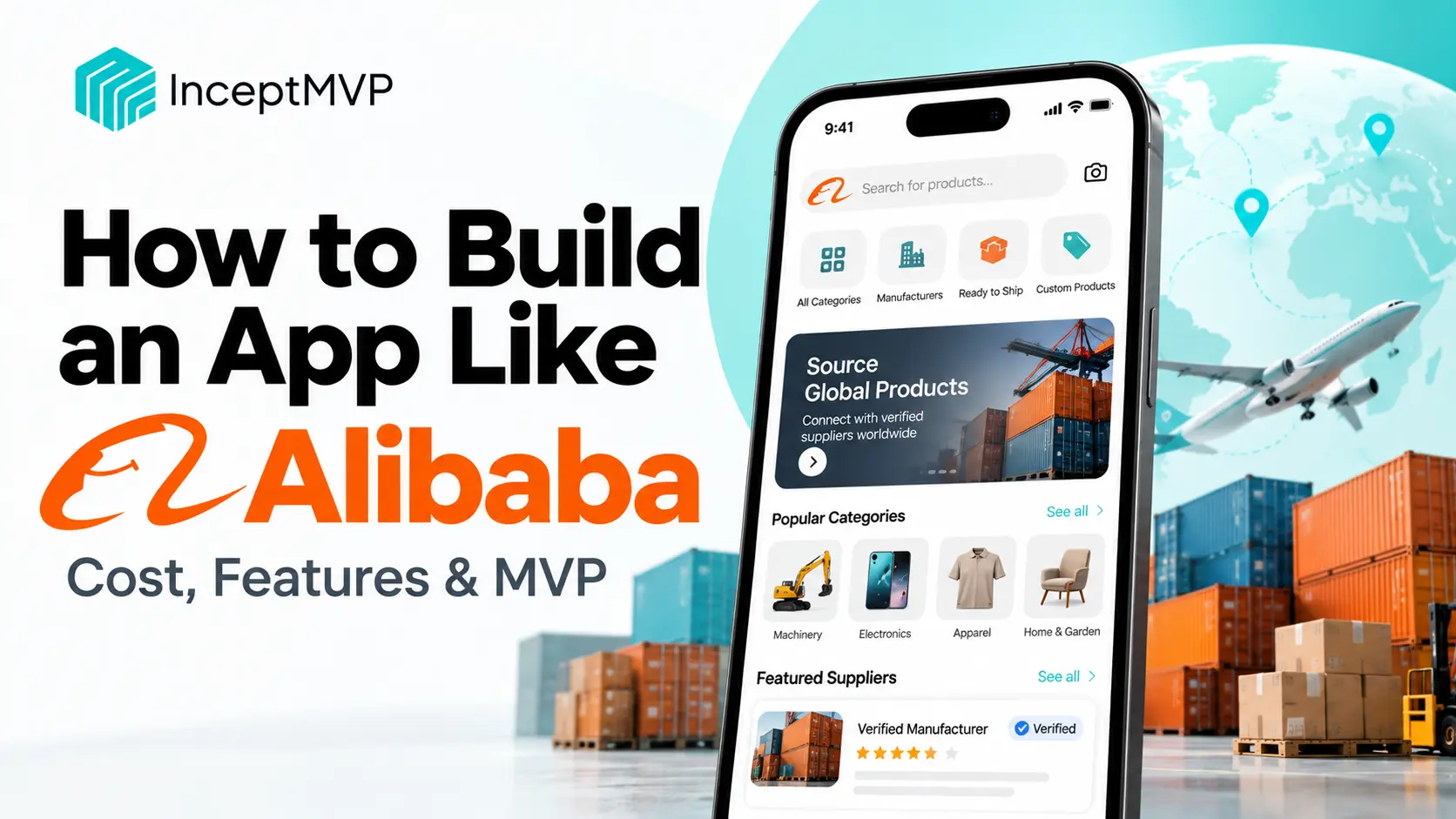
A practical guide for founders building a wholesale marketplace with supplier verification, bulk ordering, and quotation systems.
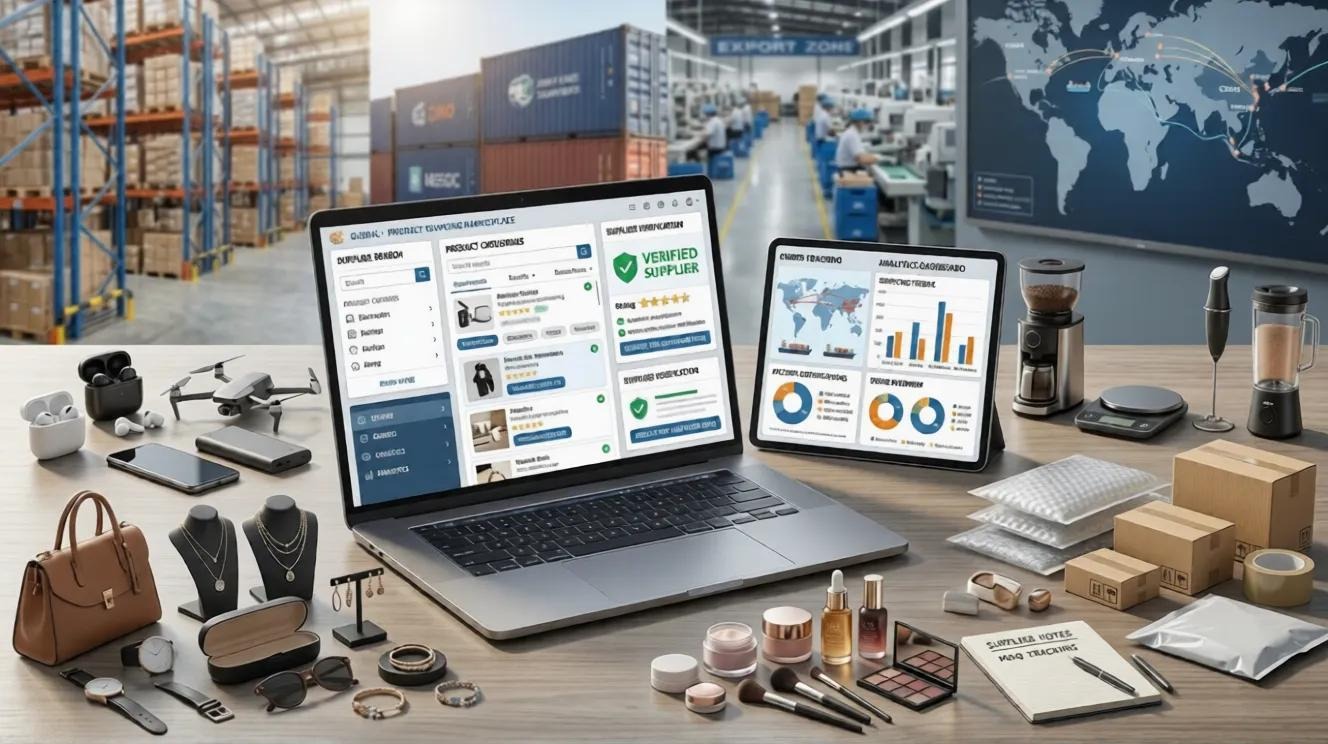
Businesses buying products in bulk need more than an online shopping cart. They need reliable suppliers, clear pricing, minimum order quantities, product specifications, and a way to negotiate large orders.
That is the business model behind platforms such as Alibaba.com. It connects business buyers with suppliers and supports product discovery, inquiries, negotiation, and purchasing workflows. Alibaba.com also provides supplier profile information, Request for Quotation (RFQ) tools, and transaction protection features such as Trade Assurance.
If you want to build an app like Alibaba, you do not need to recreate every feature from day one. You need to identify a specific market, solve its purchasing problems, and launch a focused B2B marketplace that can grow as real buyers and suppliers join.
This guide explains how to plan that marketplace, choose its first features, estimate development costs, and prepare for launch.
A B2B marketplace is a digital platform where businesses discover products or services from other businesses.
Unlike a typical consumer shopping app, a wholesale marketplace often supports:
For example, a retailer looking for 1,000 custom T-shirts may need to compare several manufacturers, share a design, request prices for different quantities, and confirm delivery terms before placing an order.
A B2B marketplace brings those steps into one digital workflow.
The distinction matters because it affects the product design, database, admin tools, and development budget.
A B2B marketplace typically has four main user groups: buyers, suppliers, administrators, and logistics partners.
1. Buyer discovers products
Search by product, category, supplier, quantity, or specification.
2. Buyer contacts suppliers
Send an inquiry or request quotations from suitable vendors.
3. Suppliers submit offers
Share price, minimum quantity, lead time, and delivery terms.
4. Buyer confirms an order
Review the offer, agree on terms, and confirm the purchase.
5. Order is fulfilled
Supplier prepares the goods; delivery and order status are recorded.
Alibaba.com describes a sourcing journey that includes finding products and sellers, contacting suppliers, requesting quotations, and protecting eligible orders through its transaction process.
Your own marketplace can use a similar journey while focusing on a narrower industry or region.
The right feature set depends on your target market. A marketplace for industrial parts may need technical specifications, while a garment marketplace may need fabric options, size breakdowns, and customization requests.
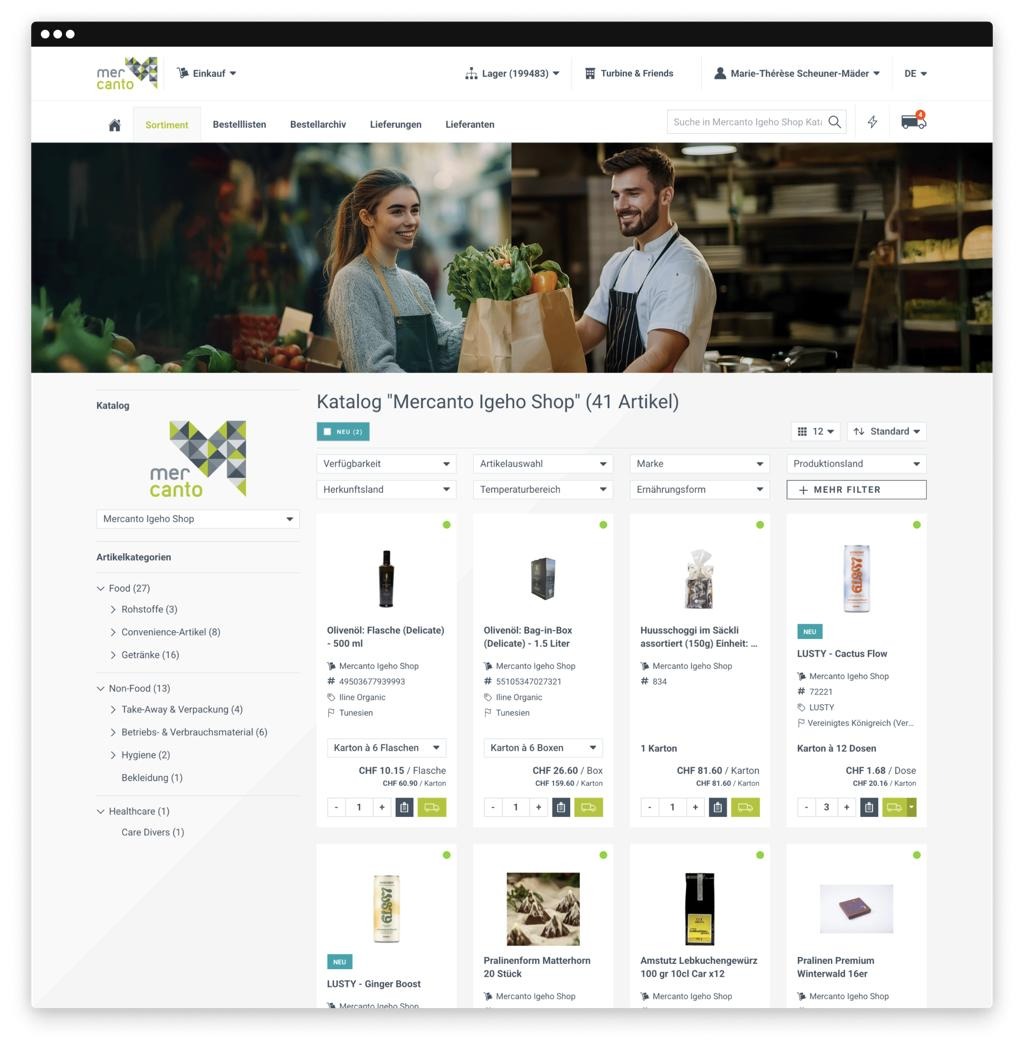
Buyers need to find suitable suppliers and make informed purchasing decisions.
Essential features include:
For the first version, keep the buying journey focused. Buyers should be able to find a product, contact a supplier, and understand the next step without confusion.
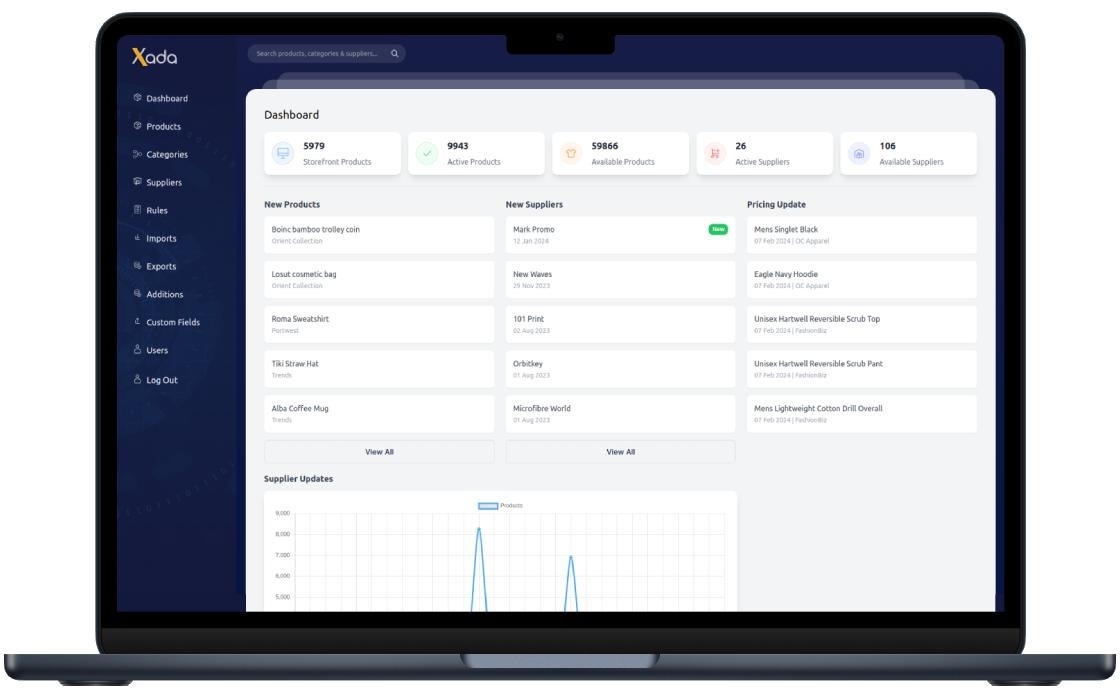
Suppliers need a practical way to showcase their products and respond to business inquiries.
Important features include:
Suppliers should be able to manage their listings without contacting the marketplace administrator for every small update.
The admin panel is essential because a B2B marketplace must manage supplier quality, product information, and disputes.
The MVP admin panel should support:
For a new marketplace, manual approval can be more practical than building a complex automated verification system.
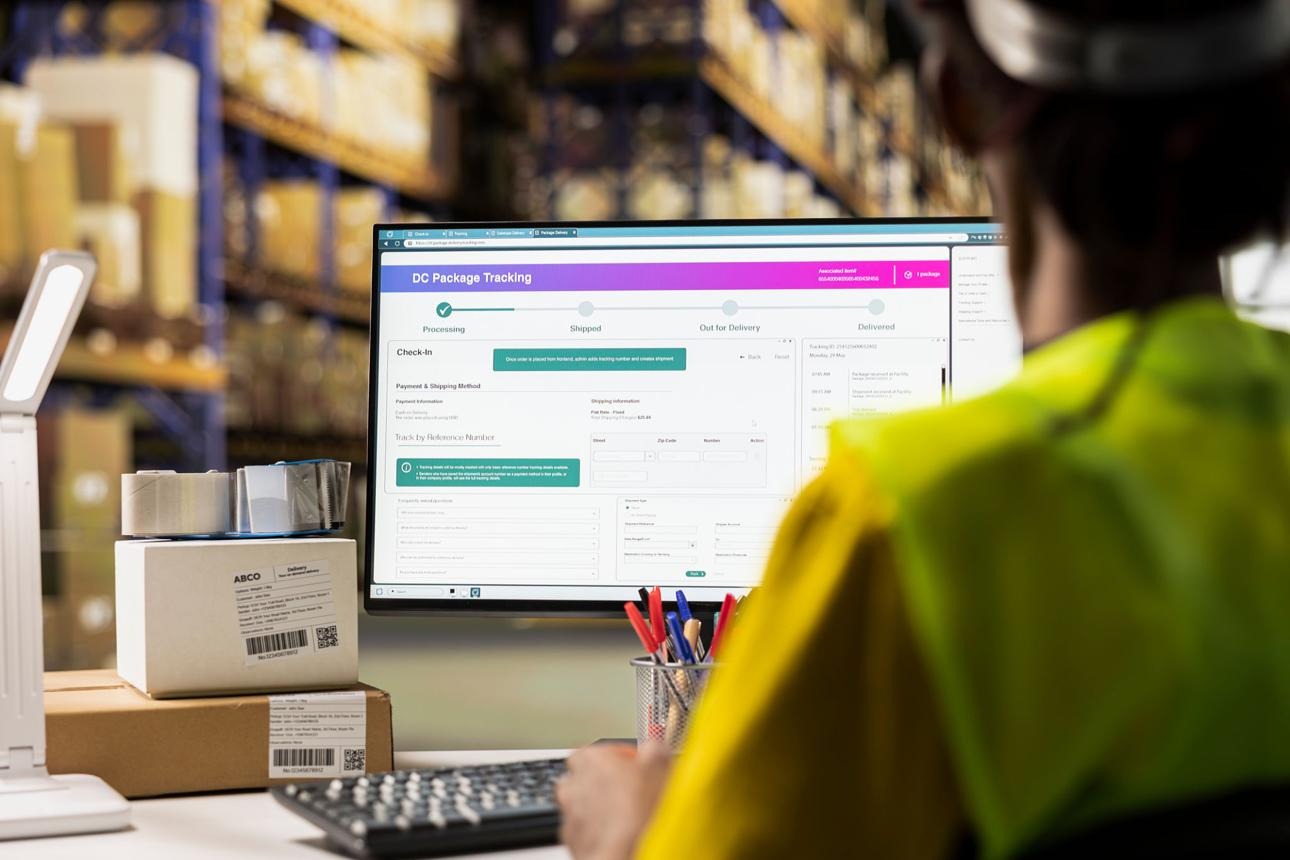
Logistics requirements depend on whether your platform simply connects buyers and suppliers or manages delivery as part of the transaction.
For an MVP, consider:
Advanced freight quotes, live shipment tracking, customs documentation, and multiple logistics integrations can be added when the business model requires them.
Three features deserve particular attention: supplier verification, bulk ordering, and RFQ systems.
In wholesale trade, buyers may be making large purchases from businesses they have never met. Supplier information can help buyers assess who they are dealing with.
A marketplace can collect and review:
A verification badge should clearly explain what was checked and by whom. Do not imply that a supplier is financially secure, product-quality certified, or guaranteed to fulfill orders unless your process actually supports that claim.
Alibaba.com distinguishes supplier profile badges and verification levels, and explains that Verified Supplier assessments can include company profile, management, production capabilities, products, and processes.
Alibaba Buyer Central
+1
MVP recommendation: Start with manual document review and a visible verification status. Add third-party checks or site inspections only when the marketplace has a clear need and budget for them.
B2B buyers often need different prices for different quantities.
A product might be listed with:
These figures are illustrative only. They show how quantity-based pricing can work, not actual market prices.
Your app should support:
For the first version, suppliers can set a few pricing tiers manually. More advanced pricing rules can come later.
An RFQ allows a buyer to describe what they need and receive offers from suppliers.
A buyer might submit:
Suppliers can then respond with price, lead time, minimum order, and other terms.
Alibaba.com’s sourcing guidance describes RFQs as a way for buyers to specify their requirements and receive bids from sellers.
Alibaba Buyer Central
+1
For an MVP: Build a simple RFQ form, supplier response screen, and quotation comparison view. Do not begin with complicated automated bidding or negotiation algorithms unless the business model requires them.
An MVP, or Minimum Viable Product, is the smallest usable version of your marketplace that can test whether buyers and suppliers will use it.
The objective is not to launch a miniature version of every Alibaba feature. It is to prove that a specific group of buyers can find relevant suppliers and complete a useful purchasing journey.
Avoid starting with every product category.
Instead, choose a segment such as:
A focused marketplace is easier to populate with relevant suppliers and easier to explain to buyers.
Document what each user needs to do.
Buyer journey: Register → Search → View supplier → Send RFQ → Compare offers → Confirm order.
Supplier journey: Register → Submit business details → Get approved → Add products → Receive RFQ → Submit quotation → Manage order.
Admin journey: Review suppliers → Moderate listings → Monitor inquiries → Support users → Review activity.
These workflows should be agreed upon before development begins.
The second column is not unimportant. It is simply less urgent until you understand how people use the marketplace.
Before a public launch, onboard a small group of suppliers and buyers from your chosen niche.
Observe whether buyers can:
Also track supplier response time, incomplete listings, unanswered inquiries, and the number of quotations that lead to orders.
Once the core workflow works, launch to a controlled audience.
Use early activity to decide what to build next. If buyers submit RFQs but suppliers do not respond, improve supplier onboarding and notifications before adding more features.
The cost depends on the scope, user roles, platforms, integrations, design, security needs, and how much of the marketplace is custom-built.
A focused B2B marketplace MVP costs substantially less to build than a mature global platform with complex payments, logistics, analytics, and large-scale infrastructure.
The following are illustrative planning ranges in USD, not InceptMVP quotes or verified market averages.
These ranges assume a professional product team and exclude ongoing marketing, supplier acquisition, payment processing charges, and operating costs. Actual proposals can fall outside them.
Budgeting tip: Ask developers to separate the cost of discovery, design, MVP development, integrations, testing, deployment, and ongoing maintenance. That makes proposals easier to compare.
There is no single technology stack that fits every B2B marketplace. The choice depends on how complex your workflows are and how much flexibility you need.
AI powered development
Suitable for validating marketplace workflows, building web-based MVPs, and launching products with standard account, catalog, and admin features.
Consider when speed, budget control, and testing the business model are priorities.
AI augmented development
Useful when you want a more customized application experience, including mobile-first interfaces and integrations with backend services.
Consider when mobile user experience or custom workflows are central to the product.
Custom development
Useful when the marketplace requires specialized pricing logic, complex integrations, detailed infrastructure control, or highly tailored workflows.
Consider when requirements exceed what your chosen no-code or low-code platform can support efficiently.
These are options, not a required stack. Payment-provider availability, business registration, and compliance requirements must be checked for the countries where you plan to operate.
InceptMVP offers marketplace app development, including multi-vendor marketplace solutions, payment gateway integration, third-party APIs, and analytics.
The timeline depends on how many features you include and how quickly product decisions, supplier information, and integrations are ready.
A focused MVP may take around 2–4 months from discovery to launch. A more complex marketplace can take longer, especially when it includes payment workflows, supplier verification integrations, or logistics systems.
These stages may overlap, so the total calendar time is not always the sum of every range.
A marketplace can use one revenue stream or combine several. The right model depends on how buyers and suppliers behave and which party receives the most value.
The platform charges a percentage of completed orders.
This model aligns revenue with marketplace activity, but it requires a way to track transactions and handle disputes or off-platform deals.
Suppliers pay a recurring fee for features such as:
A subscription model can generate recurring revenue, but suppliers need to see enough value to keep paying.
The marketplace may charge suppliers for access to qualified buyer inquiries or premium RFQ tools.
This requires clear rules about lead quality, duplicate inquiries, and what suppliers receive for their payment.
Suppliers pay for additional visibility in relevant categories or search results.
Paid placement should be clearly identified so buyers can distinguish advertising from organic relevance.
The platform may charge for services such as order processing, inspection coordination, logistics support, or other value-added services.
These fees should correspond to services the marketplace actually provides.
Trust is central to B2B commerce because orders can involve large quantities, customized goods, and long delivery times.
Plan for:
If your marketplace holds funds, facilitates international payments, or offers transaction protection, the legal, financial, and operational requirements become more complex. Do not describe your service as escrow or guaranteed protection without confirming that the arrangement is legally and technically supported.
Alibaba.com’s Trade Assurance illustrates how order terms, payment, shipping, and dispute resolution can be connected in a transaction protection service. Its protections apply under the service’s eligibility and terms, so a new marketplace should not assume it can simply copy that model.
A broad catalog may look impressive, but buyers need relevant suppliers and suppliers need genuine inquiries. Start with one market segment and expand after you see repeat activity.
AI recommendations, complex dashboards, and automated bidding do not solve the basic problem if buyers cannot find suppliers or get responses.
A badge without a clear verification process can confuse buyers. Explain what was checked, when it was checked, and what the status does not guarantee.
A marketplace can have a strong catalog and still fail if inquiries go unanswered. Track response times and make it easy for suppliers to manage incoming RFQs.
Supplier onboarding, product moderation, customer support, disputes, and data quality need ongoing attention. These are operating responsibilities, not just software features.
Building a B2B marketplace requires more than a product catalog. It involves designing buyer and supplier workflows, setting up admin controls, and selecting the right technology for the business model.
InceptMVP’s marketplace development service covers custom marketplace design, multi-vendor functionality, payment integrations, third-party APIs, marketing tools, and analytics.
For founders planning an Alibaba-style product, the first step is to define the marketplace niche, the transaction journey, and the smallest feature set that can be tested with real users.
Explore InceptMVP’s Marketplace App Development Services or contact the team to discuss your idea, MVP scope, and development requirements.
A successful marketplace starts with a clear niche, a useful buyer-supplier workflow, and a plan to attract both sides of the market.
Talk to InceptMVP about your marketplace MVP. Define the essential features, choose a suitable development approach, and plan a launch around real buyer and supplier needs.
Turn your B2B marketplace idea into a scoped product plan.
Explore Marketplace Development
Discuss your product scope, user roles, integrations, and MVP requirements with the team.
A focused B2B marketplace MVP may have an illustrative planning range of $10,000–$30,000, while advanced platforms can cost significantly more. The actual price depends on user roles, RFQ workflows, payments, verification, integrations, and platform choice. Request a scope-based estimate before budgeting.
A focused MVP may take around 2–4 months from discovery to launch. Complex payment, logistics, and verification requirements can extend the timeline.
Start with buyer and supplier accounts, product listings, supplier profiles, search, RFQ submission, quotation responses, basic order tracking, and an admin panel. Add advanced automation after validating demand.
A marketplace can review business documents, contact details, addresses, and relevant capability information. It should explain what each verification status means and avoid promising product quality or fulfillment unless those claims are supported by the process.
A Request for Quotation system lets buyers submit product requirements, quantities, specifications, and delivery needs. Suppliers respond with offers that buyers can review and compare.
Yes, a focused marketplace MVP with standard accounts, product catalogs, inquiry forms, and admin workflows may be feasible with no-code tools. More specialized pricing, payments, and integrations may require custom development or a hybrid approach.
Common models include transaction commissions, supplier subscriptions, paid leads or RFQ access, featured listings, advertising, and service fees.
That depends on your target buyers and suppliers. A responsive web marketplace can be a practical starting point for testing a B2B workflow. A mobile app may be important when users need frequent mobile access, push notifications, or mobile-specific features.
Choose one product category, interview buyers and suppliers, validate that they will use the platform, and launch only the core discovery and quotation workflow. Avoid spending heavily on advanced integrations before the business model is proven.