Read Time:
mins
Back To Blogs
Guides
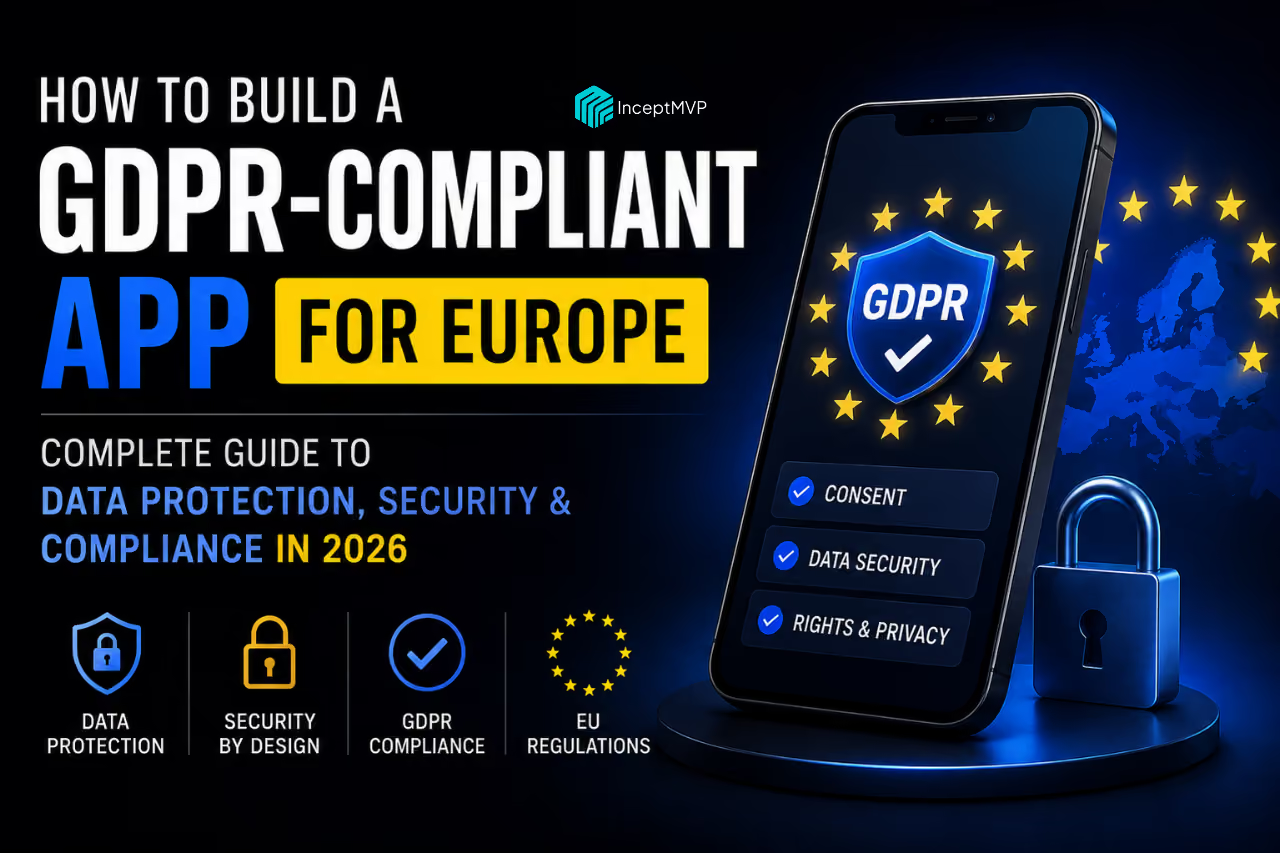
How to Build a GDPR-Compliant App for Europe: A Complete Guide for Startups and Businesses
Ujala Nawab
|
July 23, 2026

How to Build a GDPR-Compliant App for Europe: A Complete Guide for Startups and Businesses

Building an app for European users is not just about creating a great user experience. It also requires careful attention to data protection, privacy, security, and regulatory compliance.

The European market has some of the strictest digital privacy requirements in the world. A mobile or web application that collects personal information from European users must follow regulations such as the General Data Protection Regulation (GDPR), payment security standards like PCI DSS, and modern cybersecurity practices.

A non-compliant app can lead to serious consequences, including financial penalties, legal challenges, loss of customer trust, and removal from European markets.

Whether you are building a fintech app, healthcare platform, SaaS product, marketplace, AI application, or enterprise solution, compliance should be part of your product architecture from day one.

This guide explains everything businesses need to know about creating a GDPR-compliant application for Europe, including privacy requirements, security standards, payment protection, technical implementation, and compliance strategies.

What Makes an App GDPR Compliant?

A GDPR-compliant app is an application designed to protect user data throughout its entire lifecycle, from collection and storage to processing and deletion.

The GDPR applies to any organization that processes personal data of individuals located in the European Union, even if the company itself operates outside Europe.

Your app must ensure:

  • Transparent data collection
  • Legal processing of personal information
  • User consent management
  • Strong security controls
  • Data access rights
  • Data deletion options
  • Privacy-focused design
  • Breach reporting procedures

GDPR compliance is not a single feature you add after development. It is an approach that influences your product decisions, technology stack, database structure, and security architecture.

Why GDPR Compliance Matters for App Development in Europe

European users are increasingly aware of how companies handle their personal information. Privacy is no longer just a legal requirement; it has become a competitive advantage.

A compliant application helps businesses:

  • Build customer trust
  • Improve brand credibility
  • Reduce security risks
  • Avoid regulatory penalties
  • Enter European markets confidently
  • Create stronger enterprise partnerships

For startups, implementing GDPR early is usually easier and more affordable than rebuilding an existing application after launch.

GDPR Requirements Every App Developer Must Understand

1. Data Privacy by Design and Default

One of the most important GDPR principles is Privacy by Design.

This means privacy protection should be included during the planning and development stages instead of being added later.

Examples include:

  • Collecting only necessary user information
  • Encrypting sensitive data automatically
  • Limiting employee access
  • Using secure authentication methods
  • Making privacy settings user-friendly

A modern GDPR-compliant app should follow the principle of data minimization.

If your application does not need a specific piece of information, do not collect it.

2. Lawful Basis for Data Processing

Under the General Data Protection Regulation (GDPR), companies cannot collect or process personal data unless they have a valid legal basis. The table below summarizes the primary lawful bases for processing personal information.

Legal Basis When It Applies
User Consent When users actively give permission for their personal data to be collected or processed.
Contractual Necessity When processing personal data is required to fulfill a contract or provide the requested service.
Legal Obligation When a law or regulation requires the organization to process specific personal information.
Legitimate Interest When processing is necessary for legitimate business purposes that do not override users' privacy rights.
Vital Interest When processing is necessary to protect someone's life or respond to emergency situations.

Your application should clearly explain why user data is collected and processed.

3. User Consent Management

Consent is a major GDPR requirement.

A compliant app must:

  • Ask users for permission before collecting optional data
  • Avoid pre-selected consent boxes
  • Allow users to withdraw consent
  • Record consent history
  • Explain data usage clearly

Examples:

A fitness app requesting health information must explain why it needs that data.

A location-based app must request permission before tracking user location.

An analytics tool must provide users control over tracking preferences.

4. Data Subject Rights

GDPR gives users control over their personal information.

Your app should support:

Right to Access

Users can request a copy of their stored information.

Right to Rectification

Users can correct inaccurate personal data.

Right to Erasure

Also known as the "right to be forgotten."

Users can request deletion of their information.

Right to Data Portability

Users can receive their data in a usable format.

Right to Restrict Processing

Users can limit how their data is used.

Technical Requirements for Building a GDPR-Compliant App

Compliance depends heavily on your technical architecture.

Secure User Authentication

Authentication is one of the first security layers protecting user data.

Recommended practices:

  • Multi-factor authentication
  • Secure password hashing
  • OAuth authentication
  • Session management
  • Account recovery protection

Avoid storing passwords directly in databases.

Data Encryption

Encryption protects user information from unauthorized access.

A secure application should use:

Data Encryption in Transit

Use HTTPS and TLS protocols to protect information moving between users and servers.

Data Encryption at Rest

Sensitive information stored in databases should be encrypted.

Examples:

  • Personal identification information
  • Financial records
  • Healthcare data
  • Authentication tokens

Secure Database Architecture

A GDPR-compliant application requires careful database planning.

Best practices include:

  • Role-based access control
  • Database encryption
  • Regular backups
  • Audit logging
  • Data retention policies
  • Secure deletion processes

Developers should avoid collecting unnecessary personal information.

GDPR and Cloud Hosting Requirements

Cloud infrastructure plays a major role in app compliance.

Popular cloud providers offer GDPR-supporting services, including:

  • Amazon Web Services
  • Microsoft Azure
  • Google Cloud Platform

When selecting cloud infrastructure, businesses should consider:

  • European data centers
  • Data processing agreements
  • Security certifications
  • Access management
  • Monitoring capabilities

PCI DSS Compliance for Apps Handling Payments

If your application accepts payments, GDPR is not the only compliance requirement.

You may also need to follow PCI DSS (Payment Card Industry Data Security Standard).

PCI DSS protects cardholder information and applies to:

  • Ecommerce apps
  • Subscription platforms
  • Marketplace apps
  • Fintech applications

A PCI DSS compliant app should include:

  • Secure payment processing
  • Encrypted transactions
  • Tokenization
  • Access controls
  • Regular vulnerability testing

Many businesses reduce compliance complexity by integrating trusted payment providers instead of storing card information themselves.

‍

Use this checklist during planning, development, testing, and deployment to help ensure your application meets core GDPR compliance requirements before launch.

Compliance Area Requirement
Data Collection Collect only the personal information necessary to deliver your service.
Consent Obtain clear, informed, and verifiable user consent before processing personal data.
Security Encrypt sensitive information both in transit and at rest.
Authentication Implement strong identity verification using secure authentication methods.
Storage Secure databases, backups, and cloud storage against unauthorized access.
Access Control Restrict employee access using role-based permissions and least-privilege principles.
User Rights Allow users to access, export, correct, and delete their personal information.
Monitoring Continuously monitor systems for security events, suspicious activity, and potential breaches.
Testing Perform regular vulnerability assessments, penetration testing, and security audits.
Documentation Maintain compliance records, privacy policies, data processing activities, and audit logs.

Common Mistakes Companies Make When Building Apps for Europe

Collecting Too Much User Data

Many applications collect information they never use.

This increases security risks and compliance responsibilities.

Ignoring Privacy During Development

Adding GDPR features after launch often requires expensive rebuilding.

Poor Third-Party Integration Management

Analytics tools, payment providers, advertising platforms, and APIs can also process user data.

Every third-party service should be reviewed carefully.

Weak Security Practices

Common issues include:

  • Poor password storage
  • Missing encryption
  • Exposed APIs
  • Weak access controls

GDPR Compliance Process for Building an App

A practical compliance workflow includes:

Step 1: Identify Data Collection Requirements

Determine:

  • What information your app collects
  • Why it collects it
  • Where it is stored
  • Who can access it

Step 2: Design Privacy Architecture

Implement:

  • Data minimization
  • Encryption
  • Consent management
  • Access controls

Step 3: Build Security Features

Include:

  • Authentication
  • Secure APIs
  • Monitoring
  • Logging

Step 4: Test Compliance

Conduct:

  • Security testing
  • Penetration testing
  • Privacy reviews

Step 5: Maintain Compliance

Compliance continues after launch.

Regular updates, audits, and security improvements are necessary.

GDPR-Compliant App Development Architecture

A secure European application commonly includes:

Frontend Layer:

  • Secure user interface
  • Consent management
  • Privacy settings

Backend Layer:

  • Authentication
  • Authorization
  • Data processing controls

Database Layer:

  • Encryption
  • Access restrictions
  • Backup protection

Security Layer:

  • Monitoring
  • Vulnerability scanning
  • Threat detection

How Much Does It Cost to Build a GDPR-Compliant App?

The cost depends on:

  • App complexity
  • Number of features
  • Security requirements
  • Compliance needs
  • Technology stack
  • Testing requirements

A simple compliant MVP may require fewer security controls, while enterprise applications may require:

  • Security audits
  • Compliance consultants
  • Penetration testing
  • Advanced infrastructure

Investing in compliance early reduces future legal and technical costs.

GDPR PCI DSS
Protects personal data and individual privacy. Protects payment card information and transaction data.
Applies to organizations processing personal data of individuals in the European Union. Applies to businesses that store, process, or transmit payment card information.
Focuses on privacy rights, transparency, and lawful data processing. Focuses on payment security, fraud prevention, and secure cardholder data handling.
Covers organizations across nearly every industry that handle personal data. Mainly applies to ecommerce businesses, fintech companies, marketplaces, and any organization accepting card payments.

Key Takeaway: GDPR and PCI DSS serve different purposes but often apply to the same application. If your app collects personal information and processes online payments, you'll likely need to comply with both standards to protect user privacy and secure payment data.

Many applications require both GDPR and PCI DSS compliance.

‍

FAQs

What is a GDPR-compliant app?

A GDPR-compliant app protects European users' personal data by implementing privacy controls, secure data processing, consent management, and user rights management.

Do apps outside Europe need GDPR compliance?

Yes. Any company processing data from European users may need to comply with GDPR, even if the business operates outside the EU.

How do I make my mobile app GDPR compliant?

You need privacy-by-design architecture, secure authentication, encryption, consent management, data deletion features, and proper documentation.

Is GDPR compliance required for startups?

Yes. Startups targeting European users should consider GDPR compliance from the earliest development stages.

Does GDPR require data encryption?

GDPR does not explicitly mandate encryption in every situation, but encryption is a recommended security measure for protecting personal data.

Do payment apps need GDPR and PCI DSS?

Yes. Payment applications typically need to consider both GDPR for personal data protection and PCI DSS for card security.
Related Blogs
Incept MVP
Typically Replies within a day
Incept MVP
Hi there πŸ‘‹
How can I help you?
Start Chat