Estimated Reading Time:
mins
Back To Blogs
Guides
Fintech APIs Explained: Types, Uses, and Examples for Financial Apps
Ujala Nawab
|
August 21, 2026

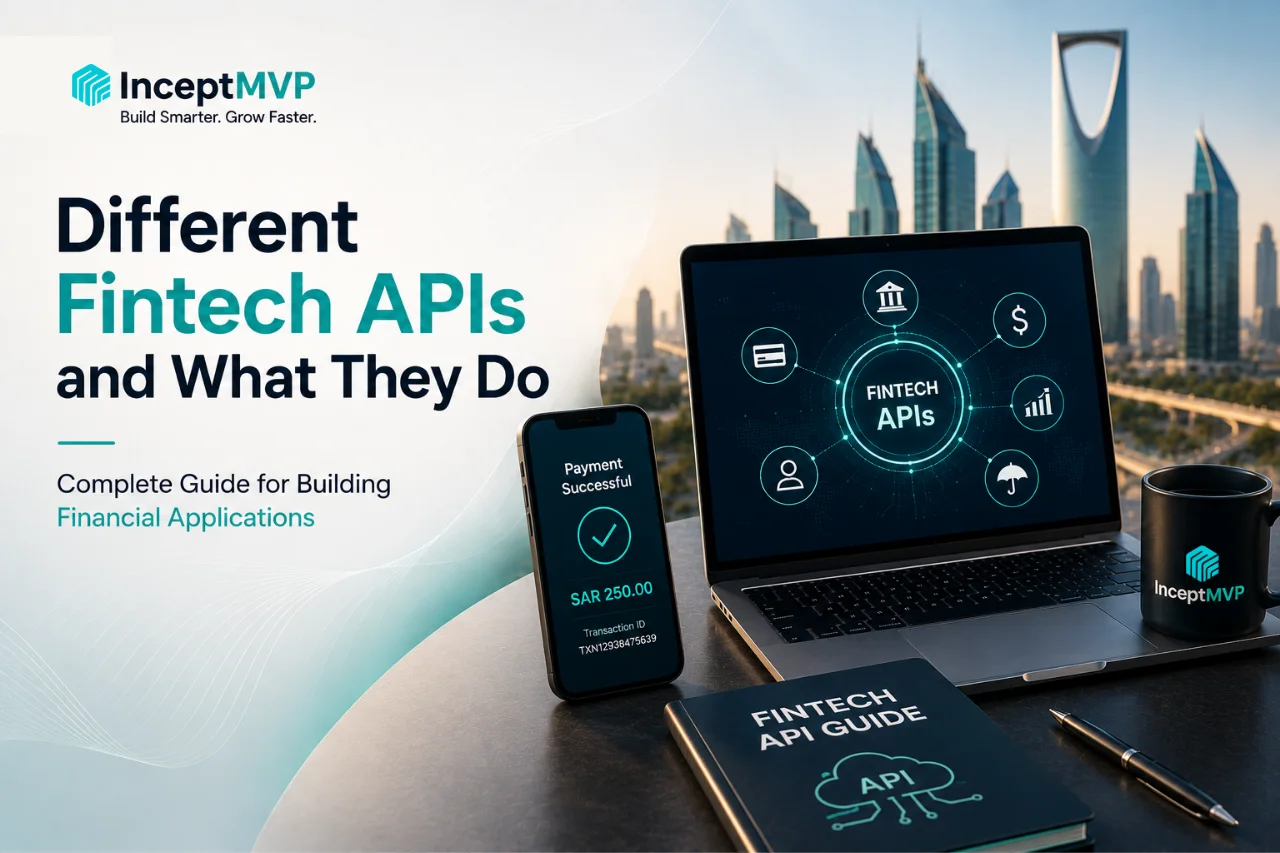
Different Fintech APIs and What They Do: Complete Guide for Building Financial Applications

Introduction

Modern fintech applications are rarely built from scratch.

Instead of creating banking infrastructure, payment systems, identity verification tools, and financial data networks independently, developers use Fintech APIs to connect applications with existing financial services.

A fintech API allows different software systems to communicate securely.

For example:

A payment app does not need to build its own banking network. It can use APIs to:

  • Accept payments
  • Verify customer identities
  • Connect bank accounts
  • Process transactions
  • Detect fraud
  • Manage financial data

For startups and businesses building fintech products, choosing the right APIs can significantly reduce development time, cost, and complexity.

This guide explains the most common fintech APIs, what they do, and how businesses use them when building financial applications.

What Is a Fintech API?

A fintech API (Application Programming Interface) is a connection that allows a software application to communicate with financial services.

It acts as a bridge between:

Your Application → Fintech API → Financial Service

For example:

A digital wallet app can use a payment API to:

  1. Receive a payment request
  2. Send transaction details to the payment provider
  3. Process the payment securely
  4. Receive confirmation
  5. Update the user's balance

Why Fintech Applications Use APIs

Building financial infrastructure from scratch is expensive and complex.

APIs help businesses:

  • Launch products faster
  • Reduce development costs
  • Improve security
  • Access existing financial networks
  • Add advanced financial features

Common fintech API categories include:

  • Payment APIs
  • Banking APIs
  • Identity verification APIs
  • Fraud detection APIs
  • Cryptocurrency APIs
  • Investment APIs
  • Lending APIs
  • Insurance APIs

1. Payment Processing APIs

What They Do

Payment APIs allow businesses to accept and process digital payments.

They connect applications with payment providers, allowing customers to complete transactions securely.

Common Features

Payment APIs provide:

  • Card payments
  • Digital wallet payments
  • Transaction processing
  • Payment confirmations
  • Refund management
  • Recurring payments

Examples of Use Cases

A Saudi eCommerce app can use payment APIs to allow customers to pay through:

  • Debit cards
  • Credit cards
  • Digital wallets
  • Bank transfers

Popular Payment APIs

Examples include:

  • Stripe API
  • PayPal API
  • Checkout.com API
  • Moyasar API
  • Tap Payments API

2. Banking APIs

What They Do

Banking APIs allow applications to connect with banking systems.

They enable users to access financial information or perform banking-related actions.

Common Features

Banking APIs can provide:

  • Account information
  • Transaction history
  • Balance checks
  • Bank transfers
  • Payment initiation

Examples of Use Cases

A personal finance app can use banking APIs to:

  • Connect user bank accounts
  • Display spending history
  • Track financial activity

3. Open Banking APIs

What They Do

Open banking APIs allow third-party applications to securely access banking information with user permission.

They create connections between:

Banks → Financial Apps → Users

Common Features

Open banking APIs enable:

  • Account aggregation
  • Financial data sharing
  • Payment initiation
  • Account verification

Examples of Use Cases

A budgeting app can connect multiple bank accounts and show:

  • Income
  • Expenses
  • Spending patterns

4. Identity Verification APIs (KYC APIs)

What They Do

KYC APIs help fintech applications verify customer identities.

They are commonly used during account registration.

Common Features

Identity verification APIs provide:

  • ID document verification
  • Face recognition
  • Biometric checks
  • Address verification
  • Identity matching

Examples of Use Cases

A digital wallet app can use KYC APIs to verify a user before allowing transactions.

Popular KYC API Providers

Examples include:

  • Onfido
  • Sumsub
  • Veriff
  • Persona

5. Fraud Detection APIs

What They Do

Fraud detection APIs help fintech applications identify suspicious activities.

They analyze transaction patterns and user behaviour.

Common Features

Fraud APIs can detect:

  • Suspicious transactions
  • Account takeover attempts
  • Unusual spending behaviour
  • Fake accounts

Examples of Use Cases

A payment app can automatically flag:

  • Unusual transaction locations
  • Large unexpected payments
  • Multiple failed login attempts

6. Card Issuing APIs

What They Do

Card issuing APIs allow companies to create and manage digital or physical payment cards.

Businesses do not need to build their own card infrastructure.

Common Features

Card issuing APIs support:

  • Virtual cards
  • Physical cards
  • Card controls
  • Spending limits
  • Transaction management

Examples of Use Cases

A fintech startup can launch a corporate expense card platform using card issuing APIs.

7. Digital Wallet APIs

What They Do

Wallet APIs help businesses create applications where users can store and manage digital funds.

Common Features

Wallet APIs provide:

  • Wallet creation
  • Balance management
  • Money transfers
  • Transaction records
  • Payment processing

Examples of Use Cases

Used for:

  • Digital wallets
  • Rewards platforms
  • Marketplace payments

8. Money Transfer APIs

What They Do

Money transfer APIs enable sending money between accounts or users.

Common Features

They support:

  • Domestic transfers
  • International transfers
  • Payouts
  • Scheduled payments

Examples of Use Cases

A marketplace app can automatically send payments to sellers after a successful order.

9. Lending APIs

What They Do

Lending APIs help businesses build digital lending products.

They connect applications with credit assessment and loan management systems.

Common Features

Lending APIs provide:

  • Credit scoring
  • Loan applications
  • Repayment tracking
  • Risk assessment

Examples of Use Cases

A fintech startup can create a loan application platform using lending APIs.

10. Investment APIs

What They Do

Investment APIs connect applications with financial markets and investment services.

Common Features

They provide:

  • Market data
  • Portfolio management
  • Trading functionality
  • Investment tracking

Examples of Use Cases

Used for:

  • Investment apps
  • Wealth management platforms
  • Trading applications

11. Accounting and Financial Data APIs

What They Do

These APIs connect applications with accounting and financial management systems.

Common Features

They support:

  • Invoice management
  • Expense tracking
  • Financial reporting
  • Business accounting

Examples of Use Cases

A business management platform can automatically sync financial information.

12. Cryptocurrency APIs

What They Do

Crypto APIs allow applications to interact with blockchain networks and cryptocurrency services.

Common Features

They provide:

  • Crypto price data
  • Wallet management
  • Blockchain transactions
  • Asset tracking

Examples of Use Cases

Used for:

  • Crypto wallets
  • Trading platforms
  • Blockchain applications

Fintech API Categories Comparison

API Type Main Purpose Common Use Case
Payment API Process payments Online checkout
Banking API Connect banking services Financial apps
Open Banking API Access account data Budgeting apps
KYC API Verify identity User onboarding
Fraud API Detect suspicious activity Payment security
Card API Issue payment cards Digital banking
Wallet API Manage digital money Wallet apps
Transfer API Move money Payout systems
Lending API Provide credit services Loan apps
Investment API Manage investments Trading apps

How Fintech APIs Help Saudi Startups

Saudi fintech startups can use APIs to build products faster while focusing on customer experience.

Common fintech products using APIs include:

  • Digital wallets
  • Payment platforms
  • Expense management apps
  • Marketplace payment systems
  • Banking applications
  • Investment platforms

APIs help startups avoid rebuilding complex financial infrastructure from the beginning.

How InceptMVP Builds Fintech Applications Using APIs

InceptMVP helps startups and businesses build fintech applications by integrating secure third-party financial services.

The team supports:

  • Fintech MVP development
  • Payment app development
  • API integrations
  • Digital wallet solutions
  • Custom financial software
  • AI-powered fintech applications

The development process focuses on selecting the right APIs based on:

  • Business model
  • Security requirements
  • Scalability needs
  • Regulatory considerations
FAQs

What is a fintech API?

A fintech API allows applications to connect with financial services such as payments, banking systems, identity verification providers, and financial data platforms.

Which APIs are required for a payment app?

A payment app may require payment APIs, KYC APIs, fraud detection APIs, banking APIs, and notification APIs depending on its features.

Are fintech APIs secure?

Reputable fintech APIs use security measures such as encryption, authentication, tokenization, and compliance standards to protect financial data.

Can startups build fintech apps using APIs?

Yes. Many fintech startups use APIs to launch products faster without building complete financial infrastructure.

What APIs are commonly used in Saudi fintech apps?

Saudi fintech apps commonly use payment gateways, banking integrations, identity verification services, and financial data APIs.

How much does it cost to build a fintech app using APIs?

The cost depends on the application's complexity, required integrations, security requirements, and development approach.
Related Blogs
Incept MVP
Typically Replies within a day
Incept MVP
Hi there 👋
How can I help you?
Start Chat