

.avif)
Ask most people what blockchain is and they’ll say Bitcoin. Maybe Ethereum. Sometimes NFTs they wish they never touched.
That association made sense early on.
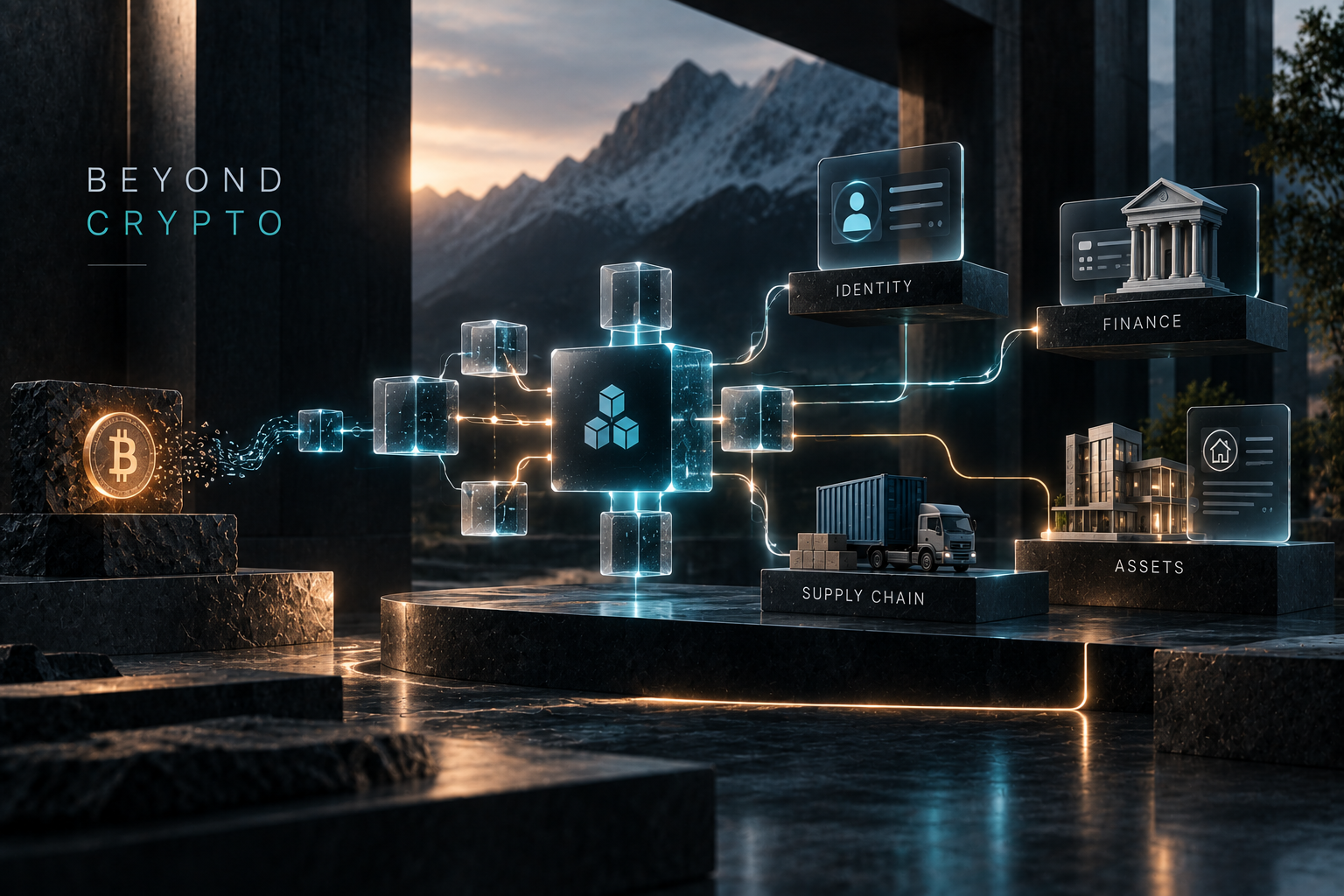
Crypto was the first real proof that decentralized systems could work at scale. But it was only a single use case of a much larger infrastructure shift.
Now we’re entering Blockchain 3.0, where the technology stops being “crypto tech” and starts becoming real-world infrastructure powering industries.
Not hype. Not branding. A functional shift in how systems are built.
Bitcoin proved decentralization works, but not that it scales.
Smart contracts introduced programmable systems, which unlocked innovation.
But problems remained:
It was powerful, but not practical for mass adoption.
Blockchain 3.0 is not a single technology. It’s a performance + usability upgrade across the entire ecosystem.
Modern systems like Proof of Stake and delegated consensus models now support:
This is the shift from experimental to usable infrastructure.
Transaction fees drop from dollars to fractions of a cent.
That unlocks:
Cost efficiency is what makes enterprise adoption realistic.
Earlier blockchains worked in isolation.
Blockchain 3.0 enables:
This is critical for real-world adoption.
This is where theory becomes reality.
Blockchain is solving one of healthcare’s biggest problems: fragmented data.
Use cases:
Impact: fewer errors, faster treatment, lower fraud costs.
This is one of the most mature applications today.
Companies use blockchain for:
Example: food contamination tracking that used to take days now takes seconds.
Digital certificates stored on blockchain:
This is especially useful in international hiring.
Still early stage, but high potential:
Governments are actively running pilot programs.
One overlooked shift: building on blockchain is finally getting easier.
Modern ecosystems like:
Now offer:
This matters because adoption always follows developer accessibility.
Blockchain 3.0 is not frictionless.
Governments are still defining:
Enterprises run old infrastructure that is not blockchain-ready.
Migration is slow and expensive.
Most users still associate blockchain only with crypto volatility.
Trust takes time to rebuild.
The future is not flashy.
It is invisible.
Blockchain will likely become:
Just like:
Nobody thinks about them anymore. They just work.
That’s the real endgame.
Blockchain 3.0 is the third evolution of blockchain technology focused on scalability, interoperability, and real-world applications beyond cryptocurrency.
It is faster, cheaper, and more scalable, making it suitable for enterprise-level applications like healthcare, logistics, and governance.
No. Cryptocurrency is just one application. Blockchain 3.0 powers broader systems like identity, supply chains, and data verification.
Healthcare, logistics, education, finance, and emerging government systems are leading adoption.
It is part of the internet’s infrastructure evolution, especially for decentralized identity and data ownership systems.


.svg)
.svg)


.avif)
