

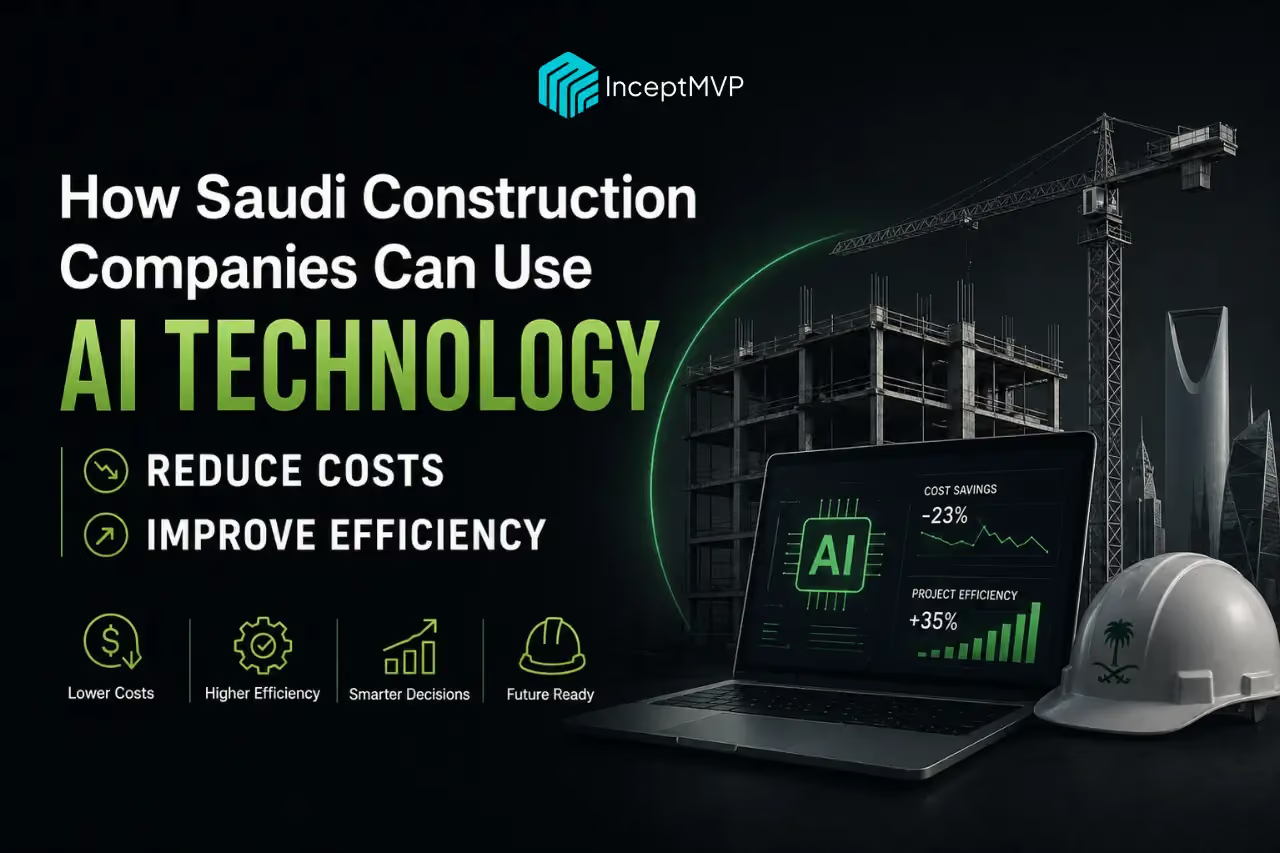
Saudi Arabia’s construction industry is entering a new era.
With mega-projects like NEOM, The Red Sea Project, Qiddiya, and smart city developments accelerating across the Kingdom, construction companies are facing increasing pressure to deliver projects faster, manage costs effectively, and maintain high-quality standards.
However, traditional construction processes often create unnecessary expenses through:
This is where artificial intelligence (AI) is changing the way construction companies operate.
AI technology allows Saudi construction businesses to automate repetitive tasks, predict project risks, optimize resources, and make better decisions using real-time data.
For construction companies looking to remain competitive in Saudi Arabia’s rapidly evolving market, AI is no longer just an innovation. It is becoming a practical tool for reducing costs and improving profitability.
The construction industry has traditionally relied heavily on manual processes, experience-based decisions, and fragmented systems.
While these methods can work, they often create inefficiencies as projects become larger and more complex.
AI helps construction companies solve these challenges by providing:
For Saudi companies working on large-scale developments, even small efficiency improvements can create significant cost savings.
One of the biggest challenges in construction is staying within budget.
Unexpected expenses often occur due to:
AI systems can analyze historical project data and current conditions to predict potential cost risks before they happen.
AI can help companies:
Instead of reacting to problems after they occur, construction companies can use AI to make proactive decisions.
Labour and resource management directly impact construction costs.
AI-powered systems can analyze:
This helps companies assign resources more effectively.
For example, AI can identify:
Better resource allocation means fewer wasted hours and improved project efficiency.
Managing multiple contractors, suppliers, and teams can become complicated.
AI-powered project management platforms can automate:
Instead of manually creating reports, managers can receive automated insights about:
This allows project managers to focus on solving problems instead of collecting information.
Equipment downtime can create expensive project delays.
AI can monitor machinery performance and predict when maintenance is required.
Using AI-powered monitoring systems, companies can:
For companies managing expensive machinery, predictive maintenance can create major savings.
Material waste is one of the biggest cost challenges in construction.
AI can analyze project requirements and help companies optimize:
AI systems can identify:
This helps companies reduce unnecessary spending and improve sustainability.
Construction safety is a major priority in Saudi Arabia.
AI-powered computer vision systems can analyze images and video feeds to identify:
For example, AI can detect whether workers are using required safety equipment or identify risks before accidents happen.
This helps companies improve safety compliance while reducing costs associated with incidents and delays.
Construction companies handle large amounts of information every day.
AI assistants can help teams quickly access:
Instead of searching through hundreds of files, employees can ask an AI assistant and receive instant answers.
This improves productivity across project teams.
Different AI solutions serve different construction needs.
AI Technology
Construction Use Case
Machine Learning
Cost prediction and risk analysis
Computer Vision
Safety monitoring and quality checks
AI Chatbots
Internal support and document management
Predictive Analytics
Project forecasting
Automation Tools
Workflow automation
Generative AI
Reports, designs, and documentation
IoT + AI
Equipment monitoring
Many companies assume AI adoption requires replacing their entire technology infrastructure.
That is not true.
A practical AI implementation approach starts small.
Before investing in AI, identify areas where your company loses time or money.
Examples:
Instead of building a complex AI system immediately, begin with one high-impact solution.
Examples:
AI works best when connected with existing business tools.
Construction companies can integrate AI with:
Track improvements such as:
AI adoption should create measurable business value.
Successful AI implementation starts with specific business problems.
A focused solution usually delivers better results than a large complicated system.
AI is not valuable because it is advanced.
It is valuable when it solves a real operational challenge.
AI requires reliable data.
Companies should ensure:
Employees need to understand how AI tools support their work.
Successful adoption requires both technology and people.
Saudi Arabia’s construction sector is expected to become increasingly technology-driven.
Future AI applications will include:
As Saudi Arabia continues developing smart cities and mega-projects, construction companies that adopt AI early will have a stronger advantage in efficiency, cost control, and competitiveness.
InceptMVP helps businesses transform operational challenges into practical digital solutions.
For Saudi construction companies, AI solutions can include:
Instead of adopting AI as a trend, companies can use it strategically to reduce costs, improve operations, and prepare for future growth.
AI reduces construction costs by improving project planning, predicting risks, optimizing resources, reducing material waste, and automating repetitive tasks.
Useful AI solutions include predictive analytics, AI project management tools, computer vision systems, automation platforms, AI chatbots, and predictive maintenance systems.
AI implementation costs depend on the solution complexity. Many companies start with smaller AI projects that provide measurable returns before expanding.
Yes. Small and medium construction companies can use AI for specific tasks such as reporting automation, customer support, scheduling, and document management.
AI improves project management by automating reporting, predicting delays, monitoring progress, and providing data-driven recommendations.
Yes. AI-powered computer vision can monitor safety conditions, identify risks, and help companies improve workplace safety compliance.
Industries benefiting from AI include:
Companies should begin by identifying operational challenges, selecting a high-impact AI solution, integrating it with existing systems, and measuring results.



.svg)
.svg)


.avif)
