

Building with Lovable often starts the same way for most founders.
An idea turns into a prototype faster than expected.
Screens appear.
Flows connect.
A working version of the product exists within hours or days.
At that point, it feels like the hardest part is already done.
But then reality hits.
A prototype is not a production product.
And this is where most founders get stuck.
Because moving from “it works” to “it scales, survives real users, and supports revenue” requires a different level of structure entirely.
This is the gap between building fast and building right.
If you are sitting on a Lovable prototype right now and wondering how to turn it into something real, this roadmap will walk you through exactly what changes between prototype and production, and how to bridge that gap step by step.

A Lovable prototype is designed for speed.
It helps you:
But production software has a different job.
It must:
Most failures happen when founders assume a working prototype automatically qualifies as production-ready.
It does not.
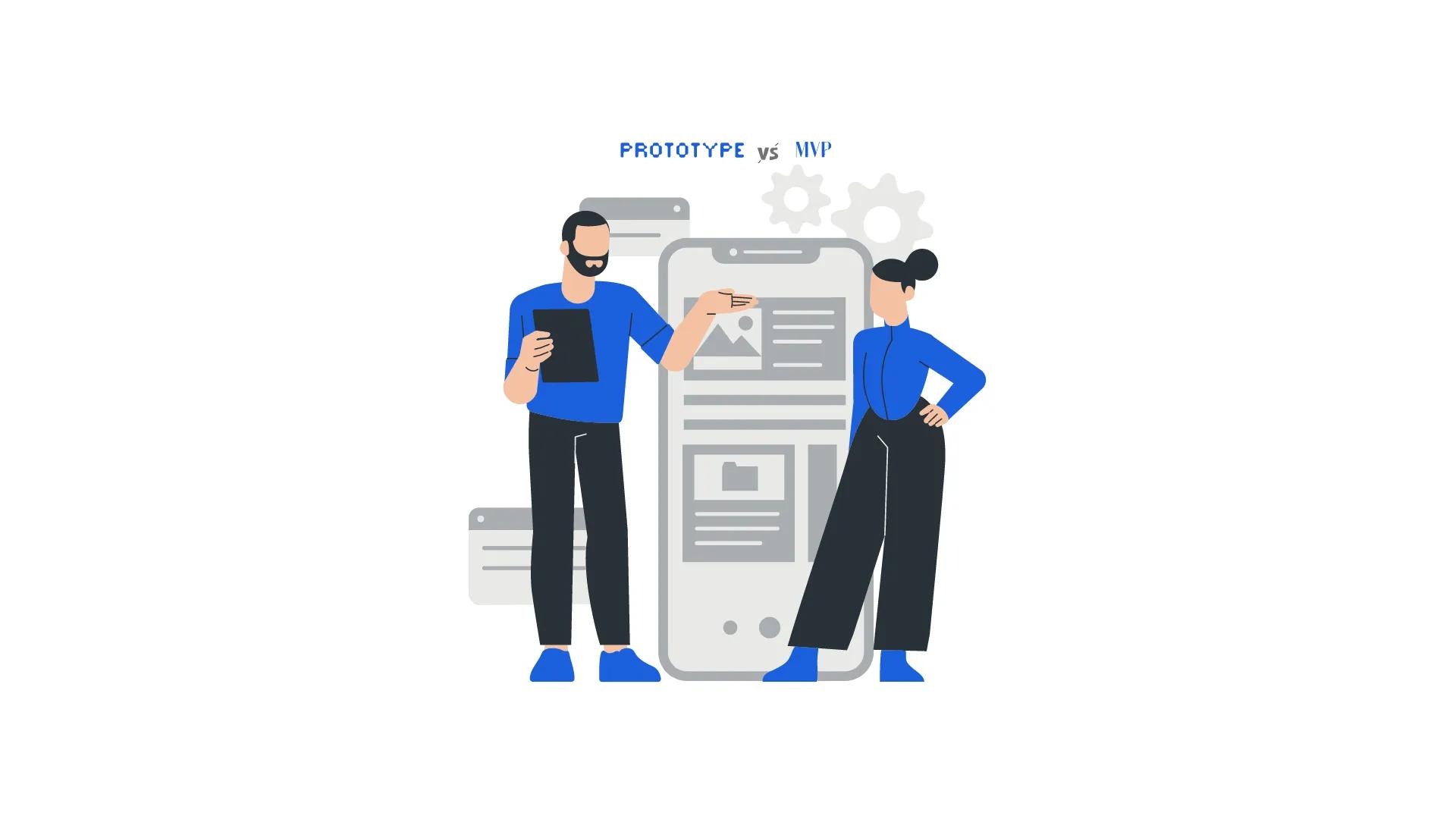
The transition requires deliberate refinement.
Before scaling anything, define what actually matters.
Your production product should not include every experimental feature you added during prototyping.
Go back to your core value:
Remove everything that does not support this core flow.
Production starts with focus, not feature expansion.
This is the foundation of production readiness.
Even if your Lovable prototype works, underlying structure may still be fragile.
You need to stabilize:
If architecture is unstable, scaling will break the system later.
Production requires predictability, not improvisation.
One of the unique challenges in Lovable builds is accumulated prompt complexity.
As you iterate, you may have introduced:
Production systems cannot carry unnecessary complexity.
This is the stage where simplification matters more than expansion.
Refactor until the system is readable, maintainable, and predictable.
Prototype logic focuses on whether something works once.
Production logic focuses on whether it works every time.
That means upgrading:
A production app is not judged by success scenarios.
It is judged by failure scenarios.
Prototype performance is usually forgiving.
Production performance is not.
Now you must optimize:
Even small delays become major issues at scale.
Performance is not cosmetic.
It is business-critical.
Once real users enter the system, security becomes essential.
Ensure:
A prototype can ignore edge risks.
Production cannot.
Trust is part of your product.
Testing prototypes is functional.
Testing production is behavioral.
You must simulate real-world usage:
You are not testing features anymore.
You are testing experience under reality.
Production is not just about launching.
It is about observing what happens after launch.
Set up:
Without visibility, production issues become invisible risks.
Lovable helps you build fast, but production needs awareness and control after deployment.
Once stability is confirmed, you can expand carefully.
Add:
But only after core stability is proven.
Scaling too early is one of the fastest ways to break a system.
This is where many founders accelerate dramatically.
A prototype often feels complete but hides structural weaknesses.
At InceptMVP, we help founders move from Lovable prototypes to production-grade SaaS products by refining architecture, fixing scalability issues, and preparing systems for real-world usage.
Most production delays are not feature problems.
They are structural problems.
Not because they fail.
But because they stay stuck in prototype mindset.
Common reasons include:
Production requires discipline, not just speed.
A prototype built with Lovable is already a powerful starting point.
It proves your idea can exist.
But production is where your idea becomes a real business system.
The transition is not automatic.
It requires structure, refinement, and intentional engineering decisions.
Once you make that shift, your product stops being an experiment.
It becomes something users can trust, rely on, and grow with.
A prototype proves an idea works. A production product proves it works reliably for real users at scale.
Yes. Most prototypes can evolve into production products with architectural refinement and performance optimization.
Because founders keep adding features instead of stabilizing architecture, security, and system reliability.
As soon as your core value proposition is validated and users show genuine interest.
Focus on architecture stability, authentication, database consistency, and deployment reliability.
Repeated iterations often create overlapping workflows and redundant logic that make scaling unstable.
Critical. Monitoring reveals performance issues, errors, and failures before they damage user trust.
No. Production requires simplification and stabilization, not expansion.
Usually yes. Most Lovable prototypes only need structured refinement rather than complete rebuilds.
When your prototype works but feels fragile, scaling concerns appear, or launch delays keep growing.
.avif)


.svg)
.svg)
.avif)



.avif)
