

Launching a new product is exciting but it’s also risky and expensive. Most startups fail because they spend months (and thousands of dollars) building a full app without validating their idea first.
That’s where MVP app development comes in.
An MVP (Minimum Viable Product) app helps startups launch faster, test smarter, and spend less, while still delivering a version customers can actually use.
In this blog, we’ll break down how MVP app development saves money and time for startups, the key benefits of MVP development, and how to choose the right MVP app development company to get your idea off the ground.
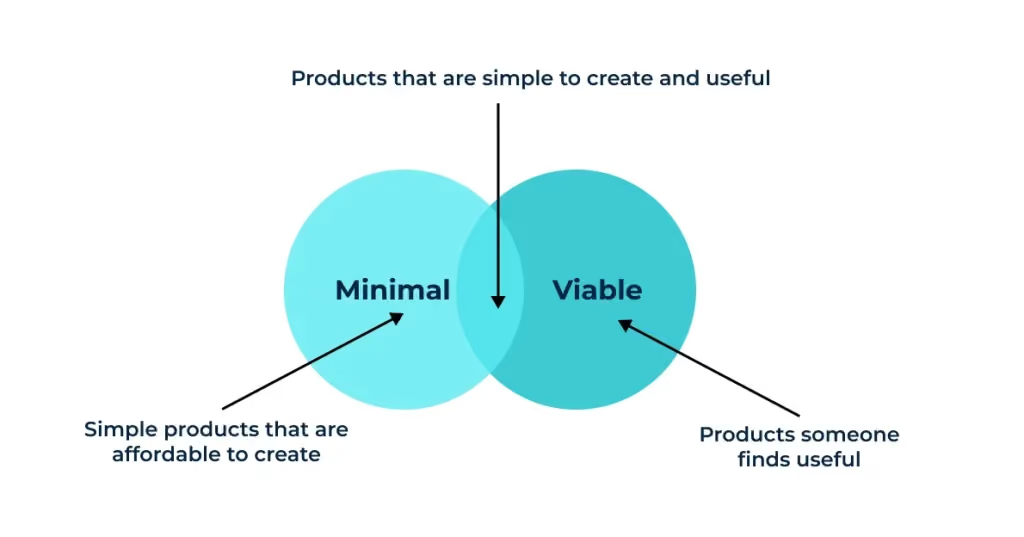
MVP app development is the process of building a minimum viable product app, a simplified version of your product that includes only the core features needed to test your idea in the real market.
Instead of waiting months to perfect your app, you launch a functional prototype within weeks.
This approach allows startups to:
Think of it as your smart launch strategy: build less, learn more, and scale confidently.
When you skip straight to full product development, you risk spending months building features users might not even want.
MVP development eliminates that risk.
A professional MVP app development company focuses only on your core features, enabling you to launch 3–5x faster than traditional app builds.
MVP projects use Agile methodology, meaning updates happen in quick cycles.
Each sprint gives you real-time progress and flexibility to pivot when needed.
Instead of guessing, you launch and test your MVP app directly with users.
Feedback from early adopters helps you refine your app before full release saving months of rework.
Building an app is expensive especially for startups still finding product-market fit.
With MVP app development services, you’re only paying for what matters:
You can save 40–60% of the total budget by avoiding unnecessary features upfront.
Your budget can go into marketing and user testing, instead of unused features.
The result? You build smarter not just cheaper.
Investors love seeing real user traction.
A successful minimum viable product app can attract early-stage investors and unlock additional funding much sooner.
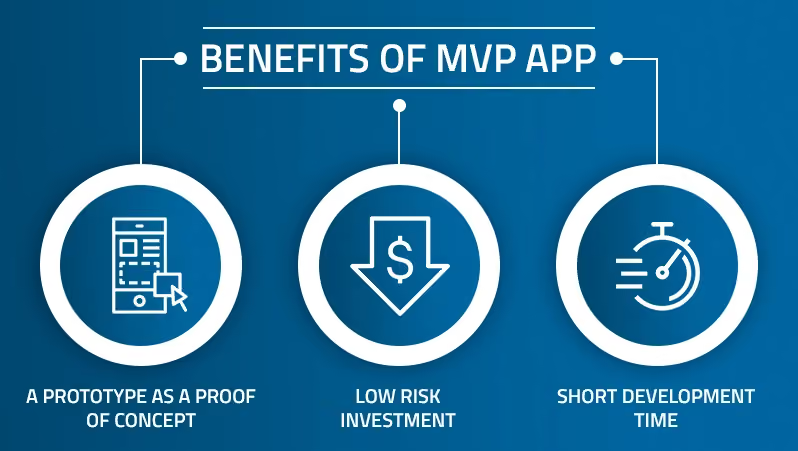
When done right, MVP app development is more than cost-cutting; it's a growth strategy.
Your choice of partner can make or break your success.
Look for an MVP app development company that:
The right team will not just “code” your app; they'll act as your product partner.
“MVP app development services for startups.”
Imagine a startup wants to build a marketplace app connecting freelancers with clients.
Instead of spending $100,000 and 8 months building it, they launch an MVP:
Within 6 weeks, they have real users and feedback showing what features matter most.
When they build version 2.0, every dollar spent goes into validated improvements.
That’s the power of MVP app development real traction before full investment.
In today’s startup world, speed and efficiency beat perfection.
By investing in MVP app development, startups save money, launch faster, and build products that users actually want.
Whether you’re testing a new idea or scaling your first product, an experienced MVP app development company can help turn your concept into a market-ready success.
Ready to launch smarter? Contact us now! Explore our MVP App Development Services to build fast, validate early, and grow confidently.
MVP app development is the process of building a Minimum Viable Product, which is a simplified version of an app that includes only core features needed to test an idea in the real market and gather user feedback quickly.
MVP app development is important because it helps startups validate ideas early, reduce development risks, save money, and avoid building unnecessary features that users may not need.
MVP app development saves time by focusing only on essential features, using Agile development cycles, enabling faster launches, and allowing early user testing to avoid long rework phases.
An MVP reduces costs by eliminating non-essential features, lowering initial development investment, and allowing startups to allocate resources toward marketing, testing, and product validation instead of full-scale builds.
Key benefits include faster time-to-market, reduced risk, lower costs, early user feedback, improved product-market fit, and higher chances of attracting investors through validated traction.
Startups benefit by testing real user demand, improving product direction based on feedback, minimizing wasted resources, and increasing the likelihood of building a successful scalable product.
An MVP app should include only core features such as essential user functionality, basic UI/UX, key workflows, and necessary integrations required to validate the product idea.
The right company should have startup experience, follow Agile or Lean methodologies, offer MVP-focused services, provide post-launch support, and have proven case studies or client success stories.
A freelance marketplace MVP might launch with basic profiles, job posting, and messaging features first, then evolve based on user feedback instead of building a full-featured platform from the start.
MVP is better initially because it reduces financial risk, speeds up market entry, and allows startups to validate demand before investing heavily in advanced features.
A successful MVP demonstrates real user traction, validates market demand, and provides data-driven proof of concept, making it easier to secure early-stage funding from investors.


.svg)
.svg)
.avif)


.avif)
